A plain dome beside the dynastic monuments
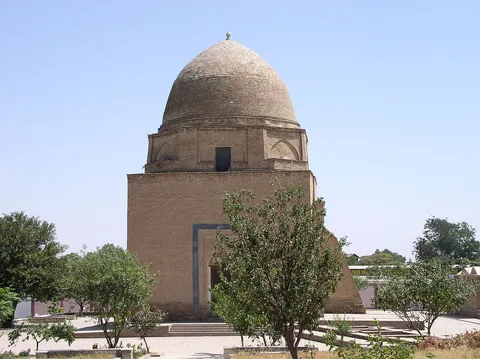
Rukhobod Mausoleum in Samarkand, Uzbekistan, is the domed tomb associated with the Sufi figure Burhan al-Din Sagharji and members of his family. It stands north of Gur-e Amir, but its plain brick form gives a very different impression from the dynastic mausoleum's blue dome. The name is commonly translated as "abode of the spirit".
Look at the simple progression of shapes: a square chamber, an eight-sided transition and a rounded dome. The interest lies in their proportions and in the religious reputation gathered around the burial. Timur sponsored the mausoleum during the fourteenth century. Stories about his deference to the saint and sacred relics beneath the dome belong to the site's traditions, rather than facts you can establish by looking at the building.
Give the brick building a little time
Rukhobod's restraint is especially noticeable if you have just been examining decorated monuments elsewhere in Samarkand. There is much less surface colour competing for attention. The outline becomes easier to read.
Follow the change from the square walls to the eight-sided support beneath the dome. A round roof needs a transition from the corners below it. Here, that basic architectural problem is visible in the building's silhouette without a towering front masking the form.
The exterior's relative plainness does not mean the tomb had no decoration. The government heritage account records remains of interior ornament, and a tiled frame associated with the saint's grave. Nor does plainness establish that the building was inexpensive. It describes what you can see, not a construction budget or a ranking of religious importance.
A scholar remembered across a wide world
The regional heritage directorate connects Sagharji with a Central Asian religious figure encountered in India by the traveller Ibn Battuta and later associated with China. It recounts his son's return of the body to Samarkand, followed by Timur's patronage of the tomb.
The remembered geography is broad. A man associated with travel and religious authority became the centre of a fixed place of devotion far from where he died.
The burial also gathered family members around it. That gives Rukhobod a scale you can understand without an imperial family tree: a remembered teacher, relatives, and people who continued to honour the place after them.
A mausoleum with neighbours
The tomb did not always stand as an isolated object in open ground. A mosque and madrasah became part of its later surroundings. The nineteenth-century additions brought teaching and prayer back into the explanation of what a mausoleum complex could do.
The government account also records an endowment supporting the mausoleum and adjoining garden. A religious foundation needed income as well as reverence. Buildings required maintenance; grounds required work. Remembering that practical support helps bring the story down from the dome to the people responsible for the site.
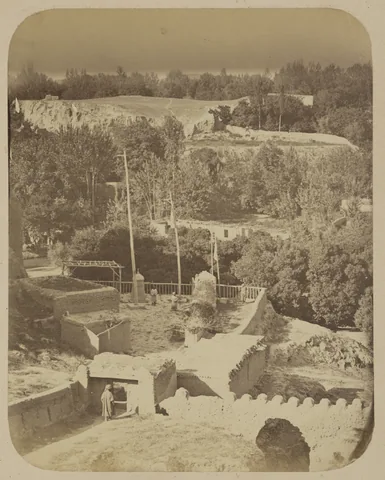
Later reconstruction altered the surroundings, including the removal of buildings. Today's clear view of the mausoleum is therefore a product of urban decisions as well as the original design. An uncluttered setting can make a structure easier to appreciate while making its former neighbourhood harder to imagine.
What to do with the legends
One tradition says sacred hairs of the Prophet Muhammad were placed beneath the dome. Another says Timur dismounted when passing the saint's mausoleum. Both belong to the site's religious traditions.
The relative plainness rewards a final look at the masonry and proportions. If you see Gur-e Amir too, you will have encountered two buildings associated with Timur whose patrons had quite different lives to commemorate.
 🇺🇿
🇺🇿 🕌
🕌 🕌
🕌 🕌
🕌 🔭
🔭 🏺
🏺 🕌
🕌 🕌
🕌 🧺
🧺 🕌
🕌