The pointed roof marks a spring
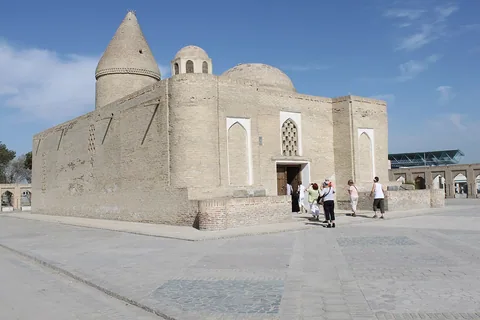
Chashma Ayub is a shrine around a spring in the northwestern part of Bukhara, Uzbekistan, near the Samanid Mausoleum. Its most recognisable feature is the pointed, conical roof among the lower domes. The form is associated with the architecture of Khorezm and is unusual in Bukhara.
The name means the spring of Ayub, or Job. According to local religious legend, people suffering from drought asked the travelling prophet for help. When he struck the ground with his staff, water appeared. The story explains the place's sacred association; it is not evidence that Job visited Bukhara.
The building also houses a museum concerned with water. That combination makes sense in an oasis city. A spring could inspire devotion and meet an urgent physical need. The guide to this place begins with both: the water people revered, and the supply on which a city depended.
Different roofs, different campaigns
The roofline gives a useful first clue to the building's history. It is a group of connected spaces with domes of different shapes, rather than a single square chamber under one covering.
The museum dates the earliest building to the twelfth century. Construction continued under Timur in the fourteenth century, with work associated with craftsmen brought from Khorezm. Later alterations continued over several centuries. The conical roof helps distinguish this shrine from the more familiar domed profiles elsewhere in Bukhara.
Successive patrons added rooms and coverings around a place already revered. The spring supplied a reason to keep returning to the same site.
A sacred association is not an identified grave
Chashma Ayub is commonly called a mausoleum. The museum's account, however, reports that no burial was found in it. The association with the prophet belongs to the spring and its legend, rather than an established identification of Job's tomb.
The spring's religious story and the dates of the standing building concern different parts of the site's history.
The museum use extends the subject beyond the miraculous spring. At Chashma Ayub, a small source of water acquired an architectural enclosure and a religious story. Both helped make it a place people remembered.
 🇺🇿
🇺🇿 🏰
🏰 🧱
🧱 💧
💧 🌳
🌳 🛍️
🛍️ 📚
📚 🏛️
🏛️ 🦁
🦁 🏠
🏠