Another boundary inside the town
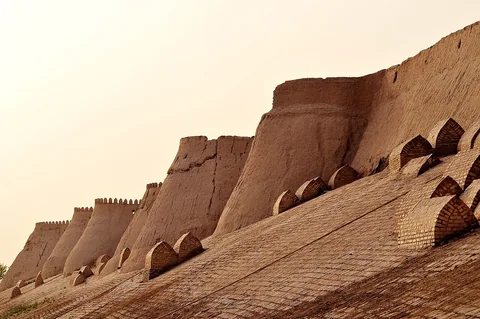
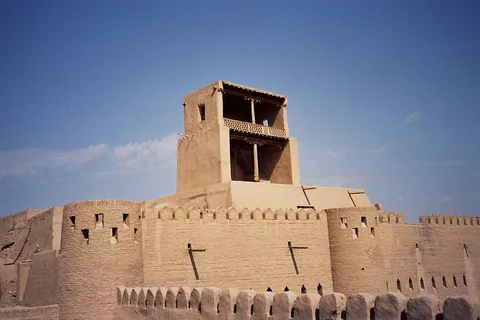
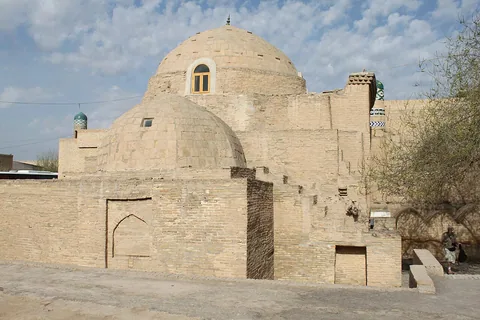
Kunya Ark is the former royal citadel on the western side of Itchan Kala, Khiva's inner town. Its name means "old fortress". A separate enclosure placed the khan's residence and government behind another boundary, even after a visitor had entered the city walls.
The citadel took shape in the late seventeenth century, but much of the surviving palace arrangement belongs to rebuilding in the early nineteenth century. Read it as a working seat of government that changed over time. The reception spaces, mosques and household quarters belonged beside less decorative necessities such as a mint, stores and stables. Governing a khanate required room for money and supplies as well as ceremony.
A residence built around access
Kunya Ark adjoins the city wall. Its location gave the ruler an enclosure of his own at the edge of the inner town. The gate and internal divisions then controlled further movement. Entering the citadel did not mean that every room or courtyard became available to you.
IRCICA's architectural inventory records a reception hall, guest rooms, a mosque and household quarters among the surviving buildings. The larger establishment also had administrative offices, an arsenal and service spaces. Many of those functions left less conspicuous remains than the decorated palace rooms.
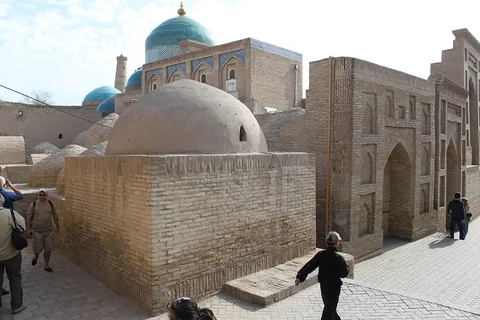
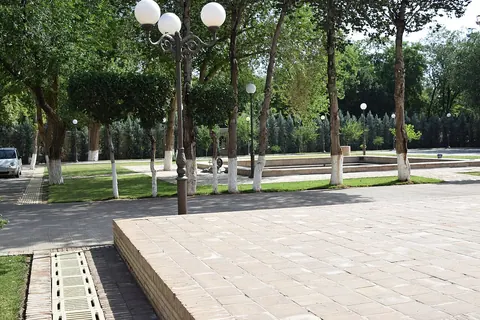
This difference matters when looking across an open area today. An apparent gap need not have been a garden or an empty square in the khan's time. Archaeological work has identified parts of the stables and arsenal. The present museum layout gives you only a portion of the former working complex.
The court made the ruler visible
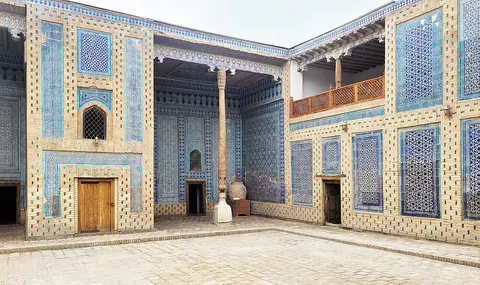
In the reception court, the open, roofed platform is the feature to study. This kind of space is called an aywan. Its height, columns and decorated rear wall gave a clear setting for an audience with the khan. The visitor remained in a courtyard while the ruler occupied a defined place above it.
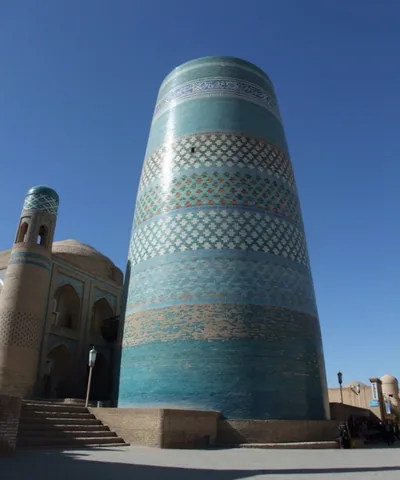
The tilework is worth examining from a little distance first. Blue and white patterns cover the wall, while the carved timber and painted ceiling add different materials and colours above. Allakuli Khan's nineteenth-century decoration connected this older citadel with the elaborate taste found in his newer Tash Hauli palace.
Government had an everyday workload
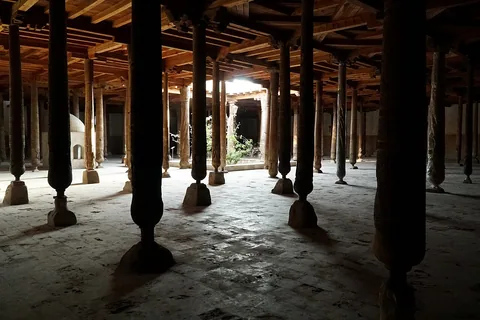
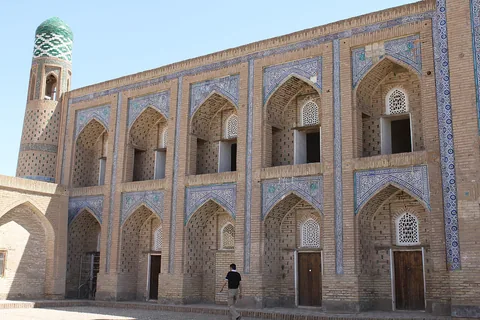
The mint supplied the khanate with coinage. A ruler's authority also circulated in money, while workshops and storerooms kept the household and government supplied. Summer and winter mosques provided for worship within the enclosure. These functions made the citadel a place where people worked and lived throughout the year.
The surviving buildings have undergone restoration, beginning in the twentieth century. The seventeenth-century citadel, nineteenth-century royal rebuilding and later conservation all contribute to what survives.
 🇺🇿
🇺🇿 🏰
🏰 🕌
🕌 🔵
🔵 🏛️
🏛️ 🟦
🟦 🗼
🗼 📚
📚 🟩
🟩 💡
💡