An old market with a modern roof
Chorsu Bazaar belongs to Tashkent's old city, but its enormous blue dome is a modern building. Architects Vladimir Azimov and Sabir Adylov designed the late Soviet market ensemble built in the 1980s. The long history of trade here and the age of the present roof are different things.
That distinction makes the place more interesting. The designers had to accommodate a working market while giving it a form that belonged beside the older city. A main dome, smaller cupolas and covered trading areas made a large modern project refer to familiar architectural shapes.
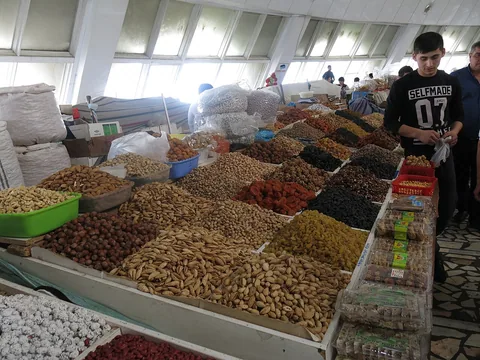
Inside and around the market, the goods provide another way to read Tashkent. Dried fruit, spices, bread, dairy products and household wares serve everyday customers as well as visitors. Follow a type of product through the stalls rather than trying to see every aisle. The people working here are running businesses, not performing an old Silk Road scene.
The roof is an engineering decision
The Tashkent Modernism research project places construction of the ensemble between 1985 and 1990. Its account describes a steel dome above a reinforced concrete lower structure. A very large covered space in an earthquake-prone city required engineering as well as decorative choices.
Look at the difference between the dome outside and the structure visible beneath it. The exterior establishes the building's outline across the neighbourhood. Inside, the roof has to span a trading floor. The supporting system is part of what you are looking at, even if the blue surface first caught your attention.
The ensemble extends beyond the main hall. Smaller roofs and connections organise the surrounding market. Treating the great dome as the whole bazaar leaves out the way goods and people move between different trading areas.
Food that explains a working market
The national tourism board describes Chorsu's dairy stalls, dried fruit and prepared-food areas. Kurt is a dried fermented milk product; suzma is a strained fermented dairy food. Seeing different ways of handling a similar ingredient can be more revealing than collecting unfamiliar dish names.
Bread, fruit and spices also invite close looking. Notice how products are grouped, displayed and handled. Buy something because you want it, ask before photographing people, and confirm quantities and prices with the seller. This guide does not endorse an individual stall or guarantee ingredients.
Prepared food is another part of the market, rather than the only reason to come. You can compare something ready to eat with the ingredients sold elsewhere. That gives a practical connection between a meal and the work needed to supply it.
Connect the bazaar to its neighbours
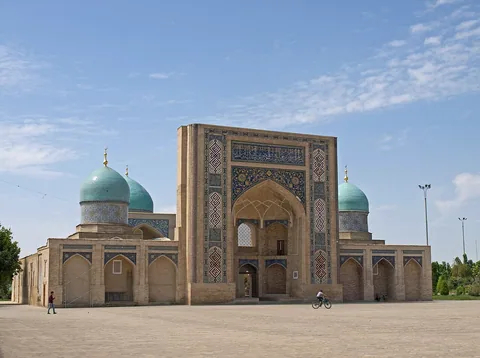
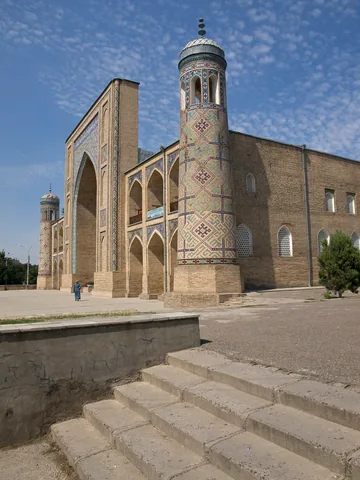
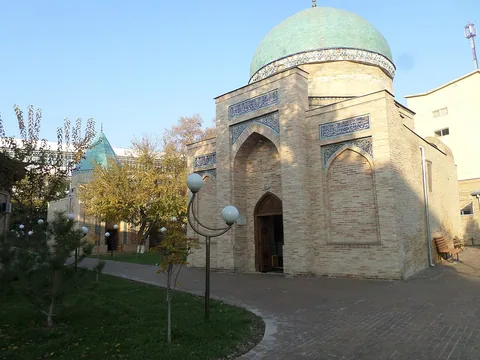
Kukeldash Madrasah and the Khoja Ahror Vali Friday mosque belong to the surrounding old-city area. Their proximity helps explain why commerce, learning and worship should be considered together when reading the district.
There is no need to pretend the area has stood still. The present market changed its setting, just as earlier buildings and trading patterns changed before it. Chorsu is a good place to ask how a city keeps a familiar activity while replacing the spaces in which it happens.
The map pin identifies the bazaar district, not a meeting point for a booked food tour. Leave time to find your own way through the trading areas, keep aisles clear and respect shop entrances. The market's most useful history lesson may be watching how an ordinary purchase works.
 EXPLORE THE CITYTashkent city guideRead the city guide ↗
 🕌
🕌 🧺
🧺 🕌
🕌 🚇
🚇 🌳
🌳 🏛️
🏛️ 🎭
🎭 🌳
🌳 🏛️
🏛️ 🕌
🕌