A royal home built over an older story
Cotroceni is both a historic palace complex and the address of Romania's presidency. The museum occupies the former royal palace; a museum visit does not mean access to the working presidential offices.
The site's earlier history belongs to the monastery founded by Șerban Cantacuzino in the seventeenth century. The later palace, designed by Paul Gottereau in the 1890s, became a home for the royal family. Its rooms were then changed by successive occupants, especially Queen Maria.
The useful question here is how much of a royal home survives in what visitors see. Some rooms preserve original fittings. Others have been restored or recreated after damage and changes of use. Rather than treating every room as an untouched royal moment, look for the difference between a surviving object, a restored interior and a later design.
From monastery to royal residence
Cotroceni's hill already had a religious and princely history before the nineteenth-century palace. The monastery foundation dates to 1679, under Șerban Cantacuzino. Later rulers used the site, so Gottereau was working within an established place of power rather than starting on an empty plot.
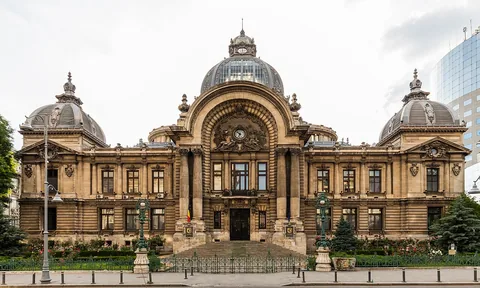
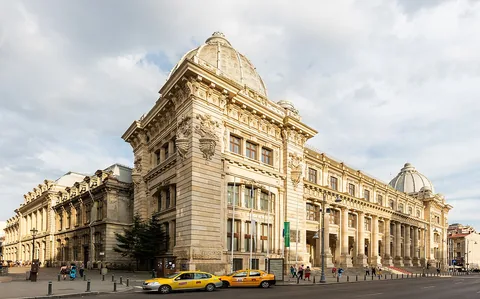
Construction of the new palace began in 1893 for the heirs to the Romanian crown. Gottereau also designed Bucharest's CEC Palace. Comparing the two gives you a way to see the same architect addressing different needs: a bank had to project public confidence, while a royal house had ceremonial rooms and private daily life to accommodate.
The rooms at Cotroceni also show how a palace could absorb different historical styles. Those choices were part of its occupants' taste. They should not be read as evidence that the building itself dates to every period its decoration recalls.
A library that helps you judge the other rooms
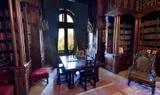
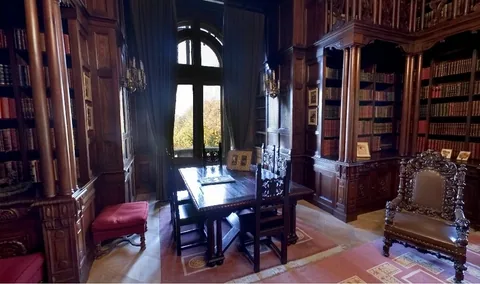
The museum identifies Ferdinand's study and library as an unusually intact interior. Built-in elm furniture, an upper gallery, an original fireplace and a chandelier give it a stronger claim to continuity than rooms that required extensive reconstruction.
If your visit includes it, look at how storage and decoration share the same woodwork. The bookshelves are useful furniture, but their carved fronts and the gallery turn them into the architecture of the room. A library here also served as a setting in which a prince, and later a king, could work and receive people.
Keep that room in mind as a point of comparison. Elsewhere, ask what the label actually dates: the design, the surviving furniture, the restoration, or the room's present arrangement. Those dates need not be the same.
Queen Maria's changing rooms
Maria took an active interest in the appearance of her homes and worked with architects including Grigore Cerchez. The museum's account of her bedroom records a substantial change from an earlier silver and Celtic-inspired interior to a later Tudor-style arrangement.
This was a lived-in house whose occupant could change her mind. That makes the alterations more interesting than a list of decorative styles. A room could express a personal taste at one point and be redesigned to express another later.
The palace also underwent restoration after the 1977 earthquake. Read reconstructed rooms with that history in view. They can explain royal life without every surface having survived from that life.
Check the museum's official visitor instructions before travelling: booking, identification and security arrangements can affect admission. The guide explains the historic complex and selected interiors; it does not include a reserved palace tour. If you enter, let one room's evidence lead you to the next question rather than trying to remember every piece of furniture.
 EXPLORE THE CITYBucharest city guideRead the city guide ↗
 🏛️
🏛️ 🎼
🎼 ⛪
⛪ 🕊️
🕊️ 🏡
🏡 🏦
🏦 🏛️
🏛️ 🌳
🌳 🏛️
🏛️ 🏛️
🏛️