A lake made into a city garden
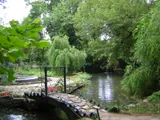
Cișmigiu is a designed public garden around a lake in central Bucharest. It officially opened in 1854, during the rule of Barbu Știrbei. The landscape gardener Karl Friedrich Wilhelm Meyer helped turn the site into a place where people could walk, sit and enjoy a deliberately arranged view.
The name reaches back to the city's water service. The cișmigiu was the official responsible for public fountains, and the name became attached to the lake and then the garden. Water is therefore part of the place's history as well as its appearance.
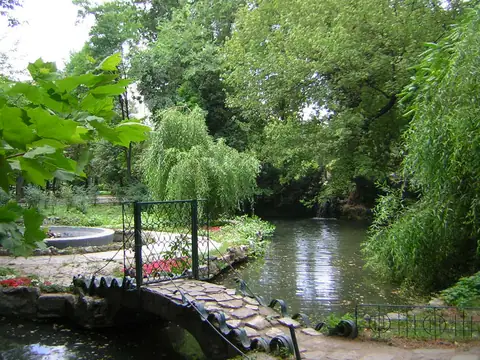
If you are visiting, notice how a path changes what you can see. A bend may hide the next stretch of lake, while an open bank gives you a longer view. The garden's apparent informality depends on these choices. Cișmigiu is useful for understanding how a crowded capital made room for public leisure without sending everyone out of town.
The garden did not stop changing in 1854
Meyer gave the site its nineteenth-century public garden form, but today's Cișmigiu is not a sealed copy of his design. Later gardeners, engineers and architects reworked it. The city's landscape assessment identifies Friedrich Rebhun's interventions between 1910 and 1943 as particularly important to the appearance that survives.
That long period of adjustment is more helpful than a single founding date. Trees grow, shade moves, paths wear and the way people use a park changes. Maintaining a historic garden means working with living material as well as stone and water.
Try comparing a planted bed with the broader tree canopy. The bed can be renewed within a season. A mature tree shapes the space over decades. They operate on different timescales, even though a visitor sees them together in one view. This is one reason a garden's history is harder to freeze than a building's façade.
Follow a view rather than a checklist
The lake gives you a way to read the layout without needing to identify every plant or statue. Follow its changing edge and notice where the paths let you approach the water or draw you away from it. Then compare that movement with the more orderly planting near an entrance.
These are observations you can make at your own pace. There is no prescribed circuit in this guide, and the map pin is a reference within the garden rather than the start of a measured route.
The water itself is maintained infrastructure. Municipal notices describe emptying, cleaning and refilling the lake. A photograph with water does not guarantee the same condition on the day you visit. If the basin is empty, the garden has not lost its history; you are seeing one of the less picturesque jobs needed to keep a public landscape usable.
A different way to spend time in Bucharest
Cișmigiu makes a good pause between interiors and major monuments. Its purpose includes ordinary use: meeting someone, taking a seat or walking without a destination. Leave room for that rather than turning every stretch of path into another sightseeing task.
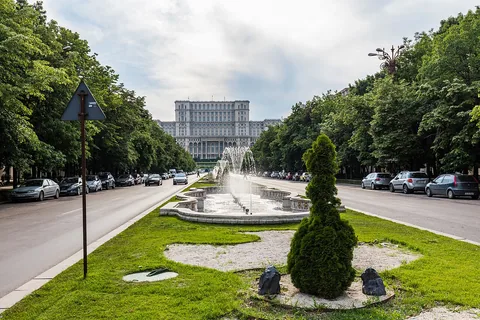
For a contrast in scale, compare the garden with the Palace of Parliament. One spreads attention across paths, planting and water. The other directs it towards an enormous building. Both are planned urban spaces, but they ask very different things of the person moving through them.
Respect planted areas and other park users. Paths and temporary works may change, and seasonal services are not guaranteed by this guide. The simplest way to enjoy Cișmigiu is to choose a view, stay with it for a moment, and notice how much of it has been arranged for you.
 EXPLORE THE CITYBucharest city guideRead the city guide ↗
 🏛️
🏛️ 🎼
🎼 ⛪
⛪ 🕊️
🕊️ 🏡
🏡 🏦
🏦 🏛️
🏛️ 🌳
🌳 🏛️
🏛️ 🏛️
🏛️