An impressive room for an ordinary agreement
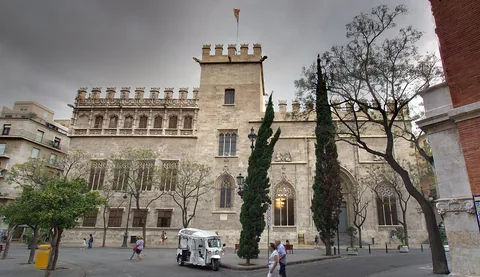
La Lonja de la Seda in Valencia was built for trade. Its grand hall could be mistaken for part of a church: slender stone columns twist upwards before spreading into a network of vaults. Yet merchants came here to negotiate contracts, and the city installed its municipal banking institution in the trading hall.
The building took shape in the late fifteenth and early sixteenth centuries, when Valencia was a major Mediterranean commercial city. Its name recalls silk, but the useful subject here is the organisation behind buying and selling. A contract needed recognition, money had to change hands, and disputes needed somewhere to go.
If you can enter, begin with a column and follow it to the ceiling. Then bring your attention back to the floor where people did business. The distance between the two helps explain the room's ambition.
The decoration sets expectations
The columns carry the roof, but they also make the hall feel ordered. Repetition joins a large space together without filling it with solid dividing walls. Merchants could occupy different parts of one shared room.
A Latin inscription runs around the interior. It connects honest dealing with Christian obligations and warns against usury. You do not need to translate every word to notice its position above the working space. The message was part of how the institution presented commerce to the people using it.
That presentation tells us what the city's patrons wanted trade to look like. It does not prove that every transaction was fair. Read the ambitious stonework and moral language together: both gave a public business institution authority.
An exchange needed more than a hall
The orange-tree courtyard, tower and Consulate of the Sea pavilion make this a group of connected spaces. The hall was only one part of its organisation. The consulate adds the legal side of maritime commerce to the contracts and money associated with the exchange.
In the pavilion's Golden Room, the carved, gilded ceiling has a separate history. It came from the old city hall. A surviving interior can therefore contain craftsmanship made for another address, brought here as the city changed around it.
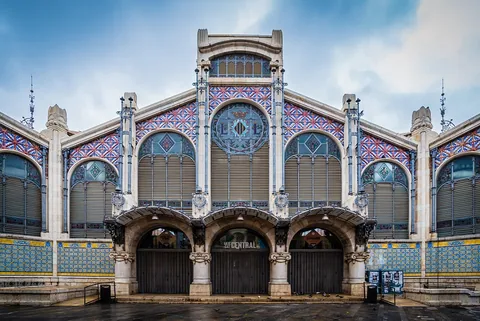
The tower's spiral staircase is another celebrated feature, but ordinary admission should not be taken as permission to climb it. Check the current visitor information. Before leaving the square, compare the exchange with the Central Market opposite. Both serve the history of trade; their different rooms explain different parts of how it works.