First recognise a synagogue
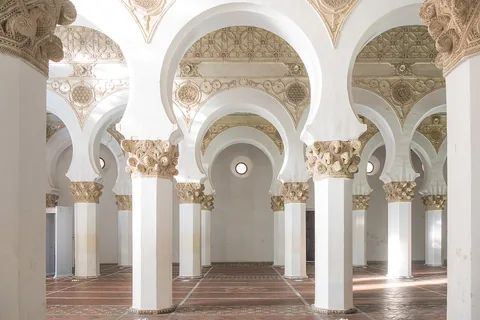
Santa María la Blanca stands in Toledo's historic Jewish quarter, in Spain. Its Christian name can obscure its original identity as a synagogue. Inside, rows of white horseshoe arches divide the hall into a central nave and four side aisles, with a higher middle space and carved capitals above the supports.
The building's precise foundation history is uncertain, and it was changed over time. What is clear is that a Jewish congregation used an architectural vocabulary closely connected with Islamic building traditions in medieval Iberia. The form of an arch does not by itself tell you the religion of the people worshipping beneath it.
The later conversion into a church also belongs to the story. Shared artistic techniques did not prevent a community from losing its place of worship. Keep both the beautiful interior and that change of use in mind while you look around.
Follow one row of supports
Start with the shape of a pillar. The supports are octagonal rather than simple round columns. Above them, capitals carry detailed carving before the arches open out into the white surfaces of the hall. The contrast between a restrained wall and a small area of intricate work rewards a slower look.
Then follow an arcade towards the far end. Repetition makes the interior seem orderly, but your view changes when you move sideways between the aisles. Several arches can overlap in a single line of sight, giving the room more depth than a straight view down its centre suggests.
These forms are often discussed as Mudéjar architecture: building and decoration shaped by Islamic traditions within the society of Christian-ruled Iberia. In this case they served a Jewish religious building. That combination is specific and useful; it does not require imagining the hall as a shared place of worship for three faiths.
What the later name leaves out
The synagogue became a church in the later Middle Ages, amid religious pressure and political conflict. Later alterations introduced different liturgical needs into the old hall. Other subsequent uses, including military and storage purposes, changed the building's place in the city again.
Its present role as a visited monument lets people see architecture that has survived those changes. Survival of a building, however, is different from uninterrupted survival of the congregation that created it.
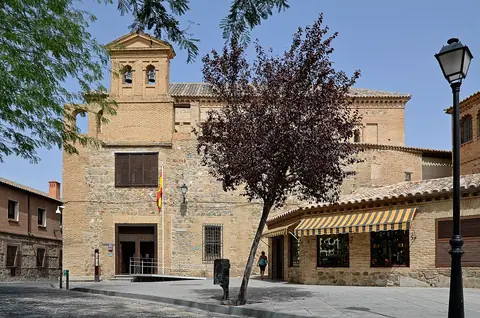
If you also read the nearby El Tránsito guide, compare the two interiors rather than treating Toledo's synagogues as duplicates. Santa María la Blanca is organised around repeated supports and arcades. El Tránsito's great prayer hall places much more emphasis on its timber roof and inscribed plasterwork. Each makes a different part of the city's Jewish history visible.