A fountain that worked in sequence
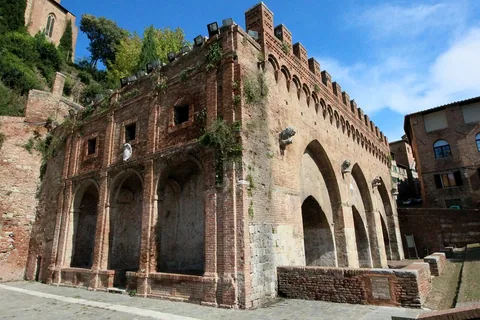
Fontebranda stands below Siena's higher streets, near the gate of the same name. Its three large pointed arches shelter a water supply that once served several different users. The original arrangement put drinking water first, animals next and laundry after that. Water continued beyond the basins to support trades and mills.
That order is the most useful thing to remember here. This was infrastructure for a crowded working neighbourhood, not simply a decorative fountain. Its supply came through the underground channels known as bottini. Look at the substantial shelter and the setting below the surrounding city. Siena had to gather, guide and allocate water carefully, and Fontebranda makes part of that hidden effort visible.
A built source for a hill city
Siena does not have a great river running through its central streets. The bottini carried water through underground passages to places where it could be used. Fontebranda belonged to that wider network.
The source is documented in the eleventh century; the surviving structure reflects rebuilding in the thirteenth. Its brickwork, stone elements and pointed arches protect a space where people could collect or work with water.
Compare it with a freestanding fountain intended mainly to decorate a square. Fontebranda has the form of a substantial building. Its roofed enclosure, basins and openings serve the handling of a valuable resource. The architecture gives practical work a visible civic presence.
One supply, several standards of use
In the original sequence, fresh water entered the first basin for drinking. Overflow then fed the place where animals drank, followed by the washing basin. The city did not treat every use as requiring the same position within the flow.
Water leaving this sequence still had value. Tanners, dyers and millers used it farther along its course. The fountain's story therefore extends beyond the basin edges into the neighbourhood's economy.
This arrangement is a useful reminder that cleanliness and water allocation have histories. It describes how the old system worked, not a recommendation about present water quality. Do not drink from or enter the basins on the strength of a historical account. Current signs and local instructions govern what visitors can do now.
The neighbourhood supplies another scale
The area around Fontebranda housed people whose livelihoods required water, including workers connected with wool production. Catherine of Siena was born and lived nearby, which explains her close association with the place-name.
Her memory can draw attention to the neighbourhood, but the water system also introduces residents whose names are less often attached to a monument. Carrying, washing, watering animals and preparing materials involved ordinary repeated labour.
Before returning to the higher streets, look once more at the large shelter around the source. Its size makes more sense when you imagine different necessary tasks sharing a regulated supply. Fontebranda adds the working city to a visit otherwise dominated by Siena's palaces and churches.