Height first, then trees
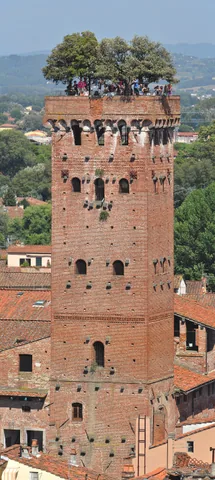
Guinigi Tower is recognisable by the holm oaks growing on its roof. The trees are the detail that first catches attention, but the tower below them explains the family's ambition. Wealthy merchants in medieval Lucca could turn money into a building tall enough to be seen above neighbouring roofs.
The Guinigi family commissioned this stone-and-brick complex in the fourteenth century. Paolo Guinigi later ruled Lucca from 1400 to 1430. The rooftop garden softened the appearance of a conspicuous residence without hiding its height. You can understand that combination from the street: follow the tall wall upwards, then compare its ordered masonry with the irregular shapes of the living trees at the top.
A family home entered the skyline
The tower was part of a substantial residential complex, rather than a freestanding lookout built for today's visitors. Its height helped make the family visible within the city.
Lucca once had many more towers. The surviving ones can make it difficult to imagine a skyline crowded with competing claims, especially where later roofs now surround them. Treat Guinigi Tower as one conspicuous survivor of that wider practice.
Look for the windows and decorative details within the long brick surfaces. The building combines the demands of a residence with the public effect of a tall silhouette. Its importance did not depend on every person entering it; people could recognise the family presence from elsewhere in the city.
The garden is older than a modern novelty
The precise date when the rooftop garden was created is uncertain. Lucca's municipal account points to a fifteenth-century illustration in Giovanni Sercambi's chronicles that shows a tree-crowned tower. That is a useful piece of evidence for the idea without proving the age of each tree standing here now.
A garden at this height requires space and continuing care. The trees therefore add something different from a carved coat of arms: they remain living parts of a historic structure.
You may read them as a softer expression of wealth and distinction, but avoid assuming the tower's original owners left one completely documented symbolic explanation. The visual contrast is certain. Specific stories about who planted a particular tree need stronger evidence than its presence today.
The view is optional; the story works below
The summit can offer a way to recognise Lucca's compact plan, but access involves stairs and the tower has no lift. Check official arrangements if you are considering a climb. This written guide does not include a ticket or require a rooftop visit.
From a public street, try to find a safe angle where both the brick shaft and the garden are visible. Notice how little ground the tower occupies compared with the amount of sky it claims. That proportion explains the appeal of building upwards in a dense city. The holm oaks make the outline memorable, while the long tower underneath preserves the original display of height.