A rural retreat beside a royal city
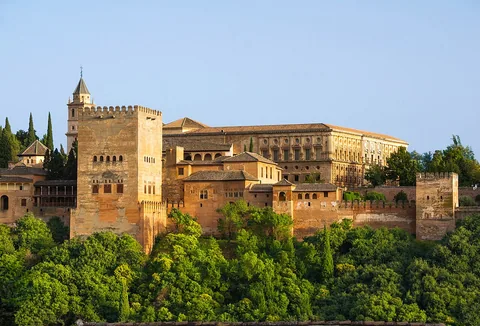
The Generalife lies east of the Alhambra in Granada, Spain. It was a rural estate with a palace, gardens and productive land used by the Nasrid rulers. That makes it a different subject from the fortified palace-city beside it, even though visitors often experience both within the same day.
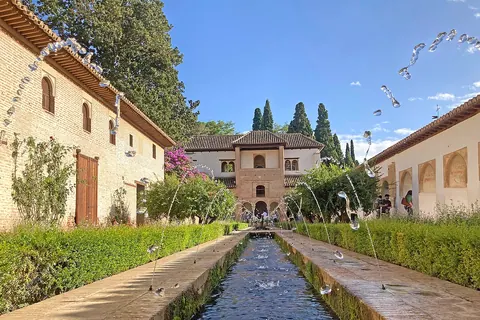
The long Patio de la Acequia offers the clearest introduction. A water channel runs through the centre, connecting the pleasure of a garden with the supply that made the estate possible. The familiar jets crossing above that channel are a nineteenth-century addition, not an unchanged feature from the Nasrid period.
Look at the canal's straight course, the planting on either side and the palace pavilions at the ends. The setting combines a place to withdraw from court business with the practical management of water and land. Its present appearance contains several centuries of decisions.
The estate had to produce as well
The Generalife's grounds included cultivated terraces. A ruler's retreat could offer views and carefully composed interiors while also belonging to a productive landscape. Thinking about both uses helps avoid the impression of an isolated ornamental garden.
The water supply connects that landscape with the Alhambra. Irrigation and household use depended on a network that brought water from the Darro. The channel visible in the courtyard makes a small part of that system unusually easy to recognise.
The palace itself provides another scale. Pavilions, arches and decorated rooms offered places to sit and look out. Where access allows, compare the long outdoor axis with the smaller spaces beside it. The estate was designed to be occupied and used, not just viewed from the middle of a photograph.
A garden that kept changing
The Generalife has remained a garden, but its planting and layout have not remained fixed. The upper gardens include nineteenth-century work, while the new gardens were developed during the twentieth century. A continuous garden history does not mean every hedge or path is medieval.
The Water Stairway gives the water another role. It runs along channels in the stairway parapets, making the supply part of a route through the grounds. That arrangement has also been altered over time, so the pleasure of the detail need not depend on imagining perfect preservation.
The most useful comparison is between the estate's enduring needs and its changing appearance. Water still has to move; plants have to grow and be maintained. The current Generalife lets you see those processes alongside historical architecture, with later garden makers as well as Nasrid patrons contributing to what is there.