Pilgrims needed somewhere to sleep
Eastbridge Hospital occupies a modest frontage on Canterbury's High Street. It developed in the late twelfth century to accommodate pilgrims travelling to Thomas Becket's tomb. Its purpose was hospitality, including a place for poorer travellers to sleep, rather than a hospital in the modern sense of a specialist medical building.
The practical needs of pilgrimage sit behind the religious destination. A journey required food and shelter, and not every visitor could pay for comfortable lodging. Eastbridge made provision for people whose presence is less obvious in the cathedral's grand architecture.
Think of the building as a set of connected functions: sleeping below, a dining space above and a chapel for worship. That arrangement explains more than the plain street frontage alone.
The sleeping room sits under the hall
The undercroft was used as a dormitory. Its short columns and vaults carry the structure above, while divisions organised places for pilgrims to sleep. It is a reminder that a vaulted medieval room need not have been a crypt or a treasury.
The refectory, the communal dining hall, stands above it. A medieval wall painting of Christ survives there, while the chapel occupies another part of the building. Food, rest and religious practice were fitted into a small urban site.
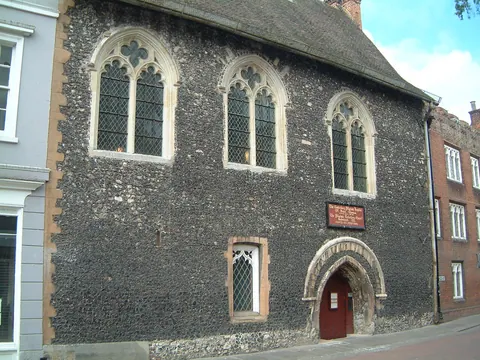
From outside, look for the flint frontage, Gothic windows and arched doorway. They mark a building whose most important activities happened behind the street edge rather than in a large public courtyard.
Hospitality continued after pilgrimage changed
The suppression of Becket's shrine changed Canterbury's medieval pilgrimage, but Eastbridge's history did not end with it. The building took on other uses, including a schoolroom in the chapel, and the institution continued to provide charitable accommodation.
Its survival also depends on physical repair. The operator reports movement in the historic undercroft and urgent work affecting access. Do not plan a visit on the assumption that the interior rooms will be open. Confirm current arrangements directly before travelling specifically to enter them.
Even an exterior visit can change how you see the High Street. Among shops and passing traffic is a building organised around the needs of people who had come a long way and needed help reaching the end of their journey. The dormitory gives those travellers a place in Canterbury's history alongside the shrine they came to visit.