A murder changed the destination
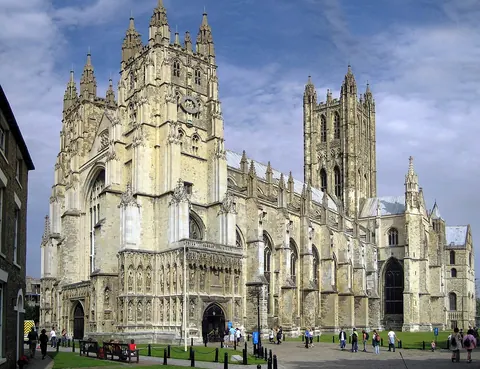
Canterbury Cathedral was already an important church when Archbishop Thomas Becket was murdered inside it on 29 December 1170. After his death and canonisation, people travelled to his tomb seeking help, healing or a way to fulfil a religious promise. The cathedral had to accommodate a new kind of demand.
Fire damaged the church in 1174. Rebuilding then gave the growing pilgrimage a more elaborate setting, including the Trinity Chapel at the east end. Becket's remains were moved into a new shrine there in 1220.
Keep that sequence in mind: an existing cathedral, a murder, a fire and a new pilgrimage space. The eastern architecture is easier to understand when it is connected with people arriving for a particular purpose.
The glass brings ordinary pilgrims into view
The Miracle Windows surround the former shrine area. Made between 1180 and 1220, they tell stories of illnesses, journeys and recoveries attributed to Becket. Their small scenes bring human lives into a building whose size can otherwise overwhelm individual detail.
Treat those accounts as evidence of medieval belief and the stories the cathedral preserved. A window depicting a cure does not establish a modern medical explanation. It does tell you something about what pilgrims hoped might happen and how such hopes were communicated.
If you can study the glass, choose a single sequence. Follow the figures and changes of scene rather than trying to absorb every panel at once. Access and conservation work can affect what is visible on a particular visit.
The chapel outlasted its shrine
Becket's great shrine was destroyed in 1538 under Henry VIII. The architectural setting survived the object that had helped make it so important. A room can therefore preserve the shape of an activity that no longer takes place in its medieval form.
That absence matters as much as the surviving stone and glass. It marks a change in religious policy and in the cathedral's relationship with pilgrimage. The present church contains evidence of both devotion and its deliberate suppression.
Canterbury Cathedral remains a working place of worship. Check current visitor information before planning entry. If you explore through photographs instead, separate the broad nave from the eastern chapels and imagine the movement between them, without assuming that the medieval shrine itself still stands.