Water and worship belonged together
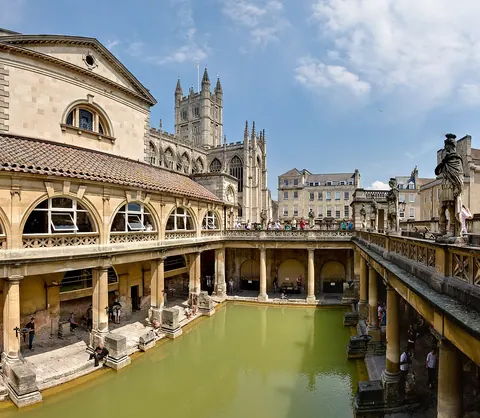
The Roman Baths in Bath, England, grew around a naturally hot spring. The Romans used its water for bathing, but they also treated the spring as a sacred place. A temple to Sulis Minerva stood beside the bathing complex. Calling this simply an ancient swimming pool leaves out much of what brought people here.
The Roman site lies below the modern street. Its pools and surviving masonry help you follow the practical use of water, while objects recovered from the spring reveal what people hoped a goddess might do for them. Bathing, religious ceremony and very personal worries occupied the same small area.
Keep the spring, the baths and the temple separate in your mind. They worked together, but each had a different purpose. That distinction makes the remains easier to understand, whether you are visiting the museum or exploring through its photographs.
A temple above the courtyard
The temple dates to the later first century AD. It stood on a raised podium, approached by steps, with four large columns supporting its decorated front. The cult statue was housed behind them in an enclosed chamber. The building gave worship a formal focus beside a source of water that was already extraordinary.
Much of this structure survives as fragments rather than a complete building. Reconstructing it mentally means giving those fragments height and space. A carved stone that looks like an isolated museum object once belonged to a frontage overlooking people gathered in the courtyard.
The complex changed over time. Small side chapels and a surrounding passage were added in the later second century. The sanctuary you are trying to picture was a place people kept adapting.
The goddess received everyday grievances
Some of the most direct evidence comes from small sheets of lead or pewter. People wrote prayers on them, rolled them up and threw them into the spring. The museum's curse tablets preserve complaints about wrongs and lost possessions, along with requests for punishment or recovery.
These were individual appeals. A stolen item that might seem modest today could matter greatly to its owner. Beside the grand temple, the tablets restore the scale of an ordinary person's problem.
If you enter the museum, compare the large stone remains with these tiny messages. One tells you what the community could build. The other tells you what someone wanted badly enough to ask a goddess for help.