The bridge was part of a bigger property plan
Pulteney Bridge carries a shopping street across the River Avon in Bath. Robert Adam designed it for William Johnstone Pulteney, whose plans for land at Bathwick needed a better connection with the existing city. Built between 1769 and 1774, the bridge made that new district more reachable and gave the crossing an impressive architectural face.
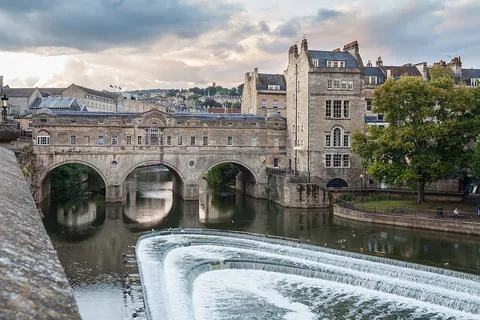
Shops occupy both sides. From the street, their windows and doorways can distract you from the fact that water passes beneath. From the riverside, three large arches reveal what holds the inhabited frontage above the Avon.
The bridge is named after Frances Pulteney. It is worth holding onto the estate connection: this was architecture helping land become a valuable part of the city.
Look at the crossing from two levels
Adam used classical details to make the southern frontage read as an ordered composition. A central pediment and repeated windows sit above the arches. The effect depends on the combination of a practical river crossing and a carefully arranged building above it.
At street level, individual shops break that grand design into everyday units. The two views describe different jobs. One addresses people moving across the bridge; the other gives the city a formal riverfront.
A riverside viewpoint can help you compare the bridge with the water and the weir. Stay on established public paths and use safe crossings. The map pin is a reference for the structure, not a suggested stopping point in the road.
The neat front conceals a history of alteration
Pulteney Bridge did not stay exactly as Adam drew it. Shops changed, structural problems required repairs, and work on the adjoining streets affected its outline. The upstream frontage developed projecting shop structures that contrast with the more formally restored downstream face.
Even the familiar relationship with the river has changed. Historic England notes the effect of the weir constructed in 1979 on the water level. The postcard view brings together elements from different periods.
That makes a comparison between the two sides rewarding. Rather than expecting a perfectly preserved eighteenth-century object, look for a structure repeatedly adjusted to carry traffic, trade and the city's ambitions across the same river.