The prison is part of the castle story
Oxford Castle lies west of the city's best-known colleges. Norman baron Robert D'Oyly began a castle here by 1071, establishing a stronghold after the conquest of England. Later, the site developed a much longer life as a place of imprisonment.
HM Prison Oxford closed in 1996. That recent date matters: these buildings are not only remains of distant medieval warfare. They also held people within living memory. The heritage attraction opened in 2006 after the site was restored.
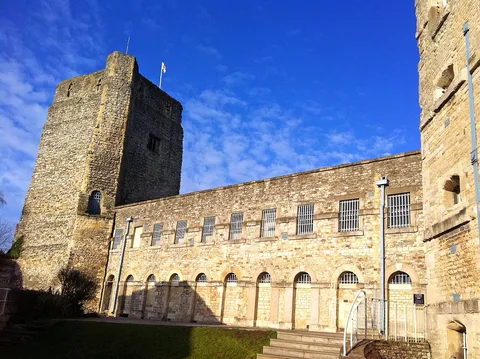
Look for different kinds of structure rather than one complete castle. The surviving mound, stone tower and prison ranges belong to a place repeatedly reused as its purpose changed.
A mound and a tower do different work
The motte is the raised earthwork associated with the Norman castle. Its height helped organise a defended site. St George's Tower provides another strong vertical feature, surviving beside buildings adapted to the prison's needs.
It is tempting to give everything at a castle one date. Here, that would flatten a complicated history of construction, survival and reuse. The buildings around the tower are part of the site's later development as well as its medieval appearance.
The shift from military stronghold to gaol changed what walls were expected to do. They still controlled movement, but the emphasis moved from defending a position to keeping particular people inside.
Reform did not mean an easy sentence
Oxford's prison was rebuilt during the reform movement that followed John Howard's work on prison conditions in the late eighteenth century. Under Daniel Harris, improvements included ventilation, sanitation, sick wards and separate cells.
Those changes should not be confused with the end of harsh punishment. Victorian prison life still relied on demanding labour and strict discipline. A more orderly building could serve a system intended to wear prisoners down as well as contain them.
If you join a visit, keep the people behind the cells in view as well as the tower and its city panorama. Check the official accessibility and ticket arrangements first. The surviving structures are easier to understand when you distinguish the needs of a fortress, a prison and a modern heritage attraction.