The museum began somewhere else
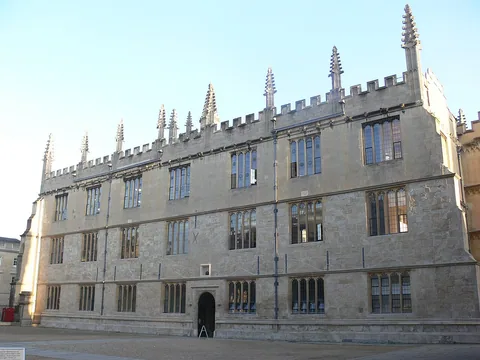
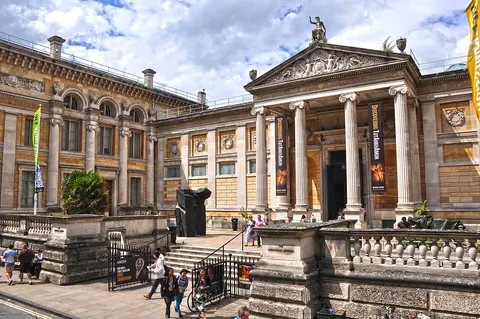
The Ashmolean Museum on Beaumont Street in Oxford traces its origins to a museum that opened in 1683 on Broad Street. The original building now houses the History of Science Museum. The familiar columned frontage is therefore part of a later chapter, rather than the doorway through which the first visitors entered.
Its early collection mixed natural specimens with human-made objects. Elias Ashmole's gift included material assembled by the Tradescant family, whose London collection had already drawn visitors. Oxford inherited an ambitious attempt to gather and study things from across the world.
Today the Ashmolean focuses on art and archaeology. Following what moved between Oxford's museums helps explain how that change happened.
Objects shared a building with experiments
The original museum did more than display rarities. It contained a lecture space and a chemical laboratory as well as rooms for the collection. Looking, teaching and practical investigation belonged in the same institution.
The transfer to Oxford was a physical undertaking. The museum records that Ashmole sent the collection from London in twenty-six large chests. Behind a grand institutional history were objects packed, moved and sorted so that other people could examine them.
The label on an object still gives you a way to ask similar questions. What was it made for? Who collected it? How did it reach this building? Those answers may be less visually immediate than a striking shape, but they can change your understanding of what you are seeing.
A collection divided and reinterpreted
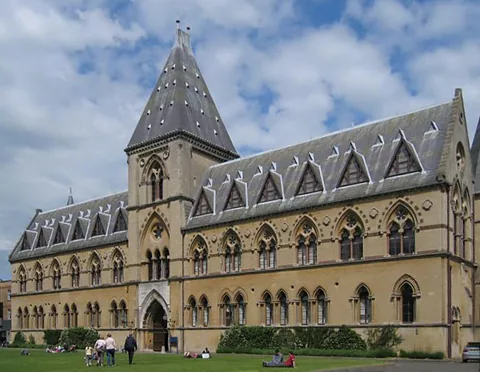
When the University Museum of Natural History opened in 1860, surviving natural history specimens from the older Ashmolean collection helped fill it. The Ashmolean's focus shifted further towards archaeology and art. Its collections moved to Beaumont Street, and a merger with the University Art Galleries in 1908 shaped the present museum.
Collecting was not a neutral process. The museum's own history acknowledges that colonial power influenced how much of its material was selected and obtained. An attractive gallery display cannot by itself explain the circumstances of acquisition.
You do not have to see every room for a worthwhile visit. Choose an object, study its form and read its provenance. The Ashmolean's story becomes clearer when you follow something specific from its original use through collection, transfer and interpretation.