A historic house shaped by one collector
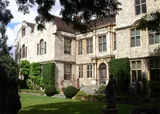
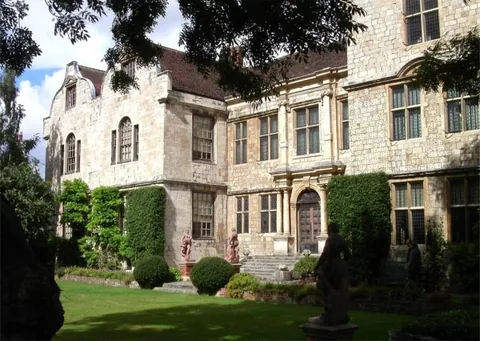
Treasurer's House stands in the former precinct of York Minster, but its furnished interiors owe much to a much later owner. Frank Green, a wealthy industrialist and collector, bought parts of the property in the late 1890s and worked with architect Temple Moore to create a house for entertaining and displaying his collection.
The rooms are therefore best understood through Green's choices. An old-looking setting does not necessarily belong to one historic period, and the house is not simply a medieval treasurer's home preserved intact. Its earlier fabric gave Green material with which to build his own view of the past.
Look for how a room presents its contents: the relationship between a large piece of furniture, the surrounding architecture and the space left for a guest. Green donated the house to the National Trust in 1930 with strong wishes about its preservation. The visit follows both his collection and a continuing question for its caretakers: how do you preserve an arrangement created by a person who kept changing it himself?
The prestigious address came first
The site's history reaches back to Roman York. Excavation beneath the basement revealed the edge of a major Roman road, roughly on the line of today's Chapter House Street. Later, the area became part of the private precinct around York Minster.
The medieval treasurer was a senior Minster officer responsible for money and treasures. A substantial residence reflected the importance of that office. The position was abolished during the Reformation, and the property passed into different ownership and uses.
That sequence helps explain the name without making the current rooms older than they are. The house carries a connection with the medieval office; its surviving form and furnished presentation also reflect later rebuilding and collecting.
Use the proximity of the Minster as context. This was a valuable address because of its relationship with a powerful institution. Green's eventual choice of property drew on that prestige, even though the source of his wealth was industrial rather than ecclesiastical.
Industry paid for the historic setting
Green's family made money in engineering, including a patented fuel economiser for steam engines. His means allowed him to buy property and assemble furniture and art. In 1897 and 1898 he acquired parts of a house that had been divided among earlier occupants.
With Temple Moore, Green removed later additions and remodelled the interiors into one residence. The result was an act of selection. Restoring a preferred appearance can make one period clearer while reducing the visibility of another.
This is not unusual in an old house, but here it is central to the visit. When a room seems to belong naturally to a distant century, ask what Green wanted the room to do. It might create an impression of ancestry, establish a setting for a collection, or provide a memorable space for guests. The overall arrangement matters as much as an individual object's age.
The house was ready for a royal visit in 1900, yet Green continued altering rooms and contents into the early 1920s. There was no single instant when his vision was fixed forever.
A collection also needs a room around it
An object changes when it is placed in a particular setting. A chair isolated in a gallery asks you to examine its form and making. A chair in a furnished room also suggests how people might have used the room and what kind of life the arrangement evokes.
Green used the house to give his collection that second kind of meaning. Look for a clear grouping rather than trying to inspect every item. Notice which object catches your eye first, what frames it and how the furnishings direct movement.
Then consult the interpretation. The dates of the objects and the date of the arrangement need not be the same. A room assembled from different periods can still be a historically important record of a collector's taste.
That distinction allows you to enjoy the interior without turning it into evidence for how an earlier treasurer lived. The room tells a particularly strong story about Green and about the use of history in an expensive early twentieth-century home.
Keeping Green's wishes was not straightforward
The gift of 1930 included the furnished house. Green had strong expectations about how it should be kept, but conservation and the practical demands of operating a visitor property complicated those wishes.
The National Trust records later changes to decoration and contents, followed by work in the 1990s to recover a presentation closer to Green's. The interior itself therefore has a conservation history, as well as the history of its original assembly.
Preservation is more demanding than leaving every object where it stands. Materials deteriorate, evidence is reassessed and people need safe access. An arrangement can be documented and understood even when an item must temporarily move.
Stories about Green returning to haunt the house if things were changed belong to the property's folklore and to accounts of his exacting character. They should not replace the documented history of his gift.
See the house as a deliberate arrangement
Before leaving, choose a room you can describe through one specific relationship: an object against a wall, furniture beneath a window, or a group arranged for a visitor's attention.
You are looking at an old building, a collector's setting and a property cared for after his departure. The layers do not cancel each other out. They explain why Treasurer's House can feel so coherent while containing decisions made across very different periods. The pleasure is in recognising the person who arranged the history, as well as the history he wanted you to see.
 EXPLORE THE CITYYork city guideRead the city guide ↗
 🏰
🏰 🏰
🏰 🏰
🏰 🏰
🏰 🏰
🏰 🏰
🏰 🏛️
🏛️ 🏛️
🏛️ 🏛️
🏛️ 🏛️
🏛️