A room that borrows the sky
At the Pantheon, the best first instruction is simple: look up. The opening at the top of the dome, the oculus, is open to the sky. Light enters as a moving patch, and rain can enter too. The building is not trying to shut the outside world away.
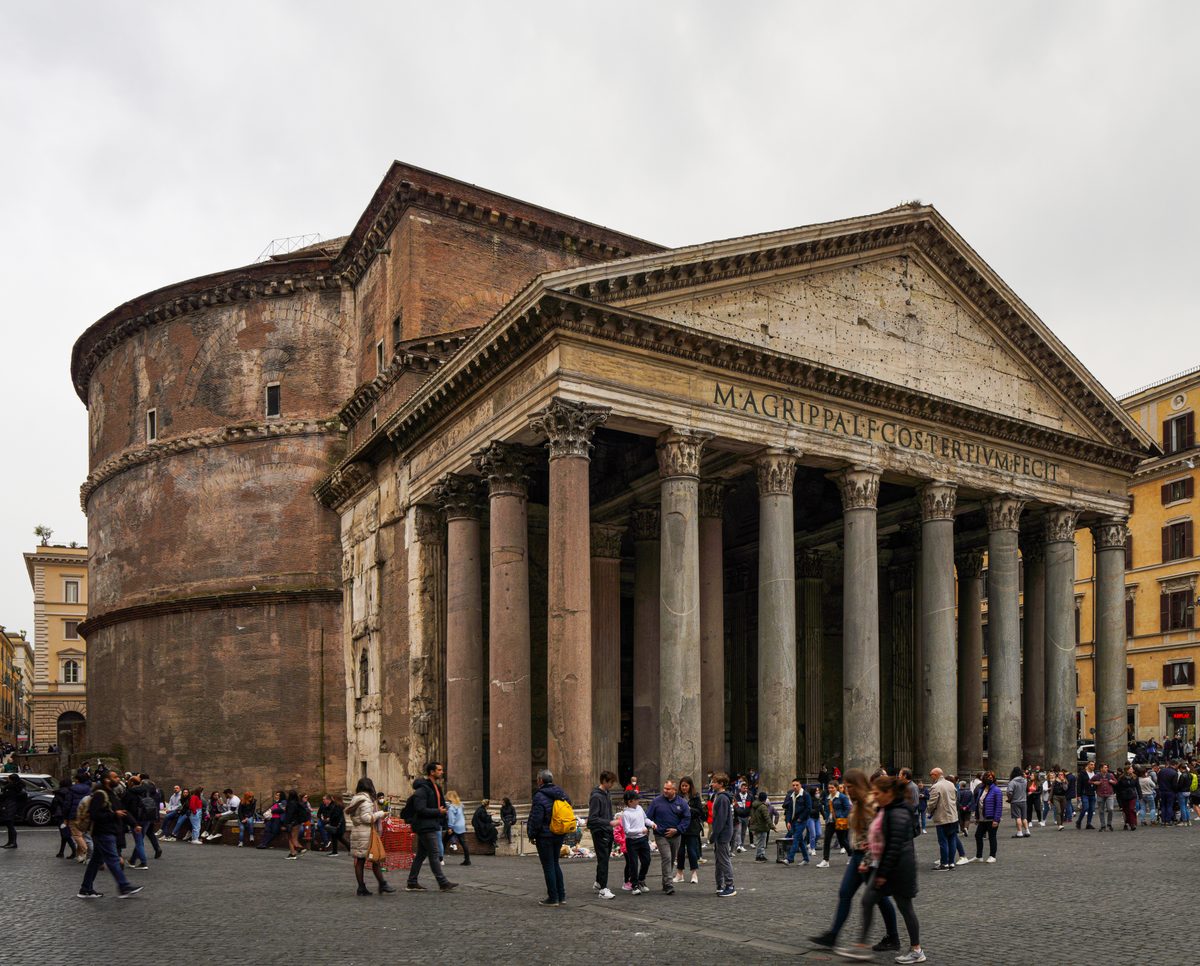
The monument we see today is associated with Hadrian's rebuilding in the second century CE. The inscription on the front still names Agrippa, who commissioned an earlier temple here. The dome's height and its internal diameter are almost the same, just over forty-three metres. Imagine a sphere fitting inside the room.
Since its conversion to a church in 609, this ancient structure has remained part of a living city. Your small takeaway: the sky is part of the architecture. Watch the light, and the room changes while you stand still.
From straight lines to a circle
Start with the photograph of the entrance. The columns and triangular pediment give you clear verticals and diagonals. Then imagine stepping into the circular interior. That change of shape is a useful way to pay attention: the outside frames an arrival, while the inside surrounds you.
Choose one row of recessed panels in the dome. These are often called coffers. Rather than trying to count every one, follow a row with your eyes and see how its rhythm helps you read the curve. The opening at the centre gives that movement a destination.
The oculus is not glazed. A drainage system in the floor deals with rain entering the space. It is a practical detail that changes the romantic image: this is a real building handling weather, not just a perfect shape in a history book.
If you are visiting, stand still for a moment instead of searching for the next photograph. Notice which surfaces look bright and which look quiet. If you are browsing from elsewhere, imagine the photograph under a different sky. A cloudy day and a clear day would not give you the same room.
The Pantheon makes looking feel like an activity in itself. There is no need to rush to the next fact. First, find the circle. Then find the light.
A different kind of time machine
For the longer version, put the dates aside for a moment and follow three contrasts. First, the crowded square and the enclosed room. Next, the weight of the walls and the lightness suggested by the open sky. Finally, the fixed stone and the changing daylight. These are prompts for your own observation, not a hidden code you have to solve.
The building also holds more than one historical identity. Its earlier temple history, later use as a church, and role as a burial place are all part of the visitor's encounter. Raphael's tomb is here, along with tombs of Italian royalty. A single building can gather very different reasons for remembrance.
Return to the inscription outside. A name on a building can make its history appear straightforward, yet this one connects the present structure with an earlier commission. It is a reminder to ask what a label tells you and what it leaves out.
Try this small looking exercise: choose a straight edge, a curve, and a pool of light. Move between them without taking a picture. Spend a few breaths on each. You may start noticing how your eyes travel through the space.
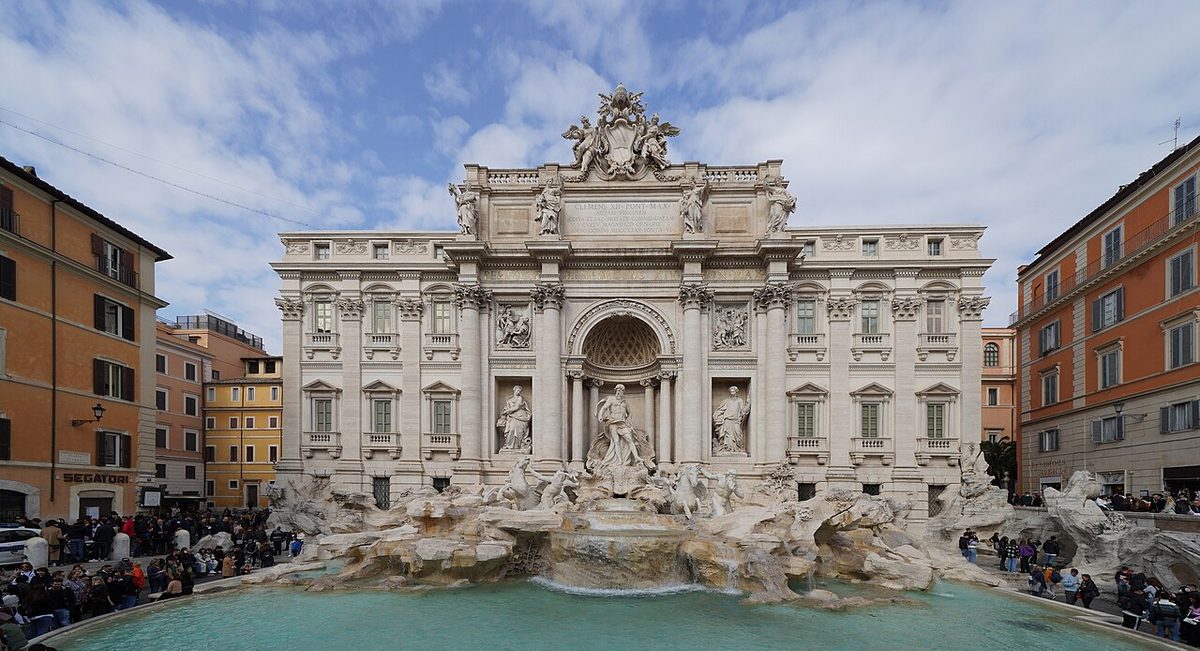
Before leaving, look up once more. The opening has not moved, but the world beyond it is always changing. Keep that image as your souvenir: an old room letting today's sky in. Trevi Fountain is another place on the map where something moving brings a stone setting to life.
 🏛️
🏛️ ☀️
☀️ 💦
💦 ⏳
⏳ 🏰
🏰