The building that kept changing jobs
Castel Sant'Angelo starts with a plot twist: it was not built as a castle. It began as the mausoleum of Emperor Hadrian, completed in 139 CE under Antoninus Pius, after Hadrian's death. The great circular mass beside the Tiber was a place for imperial remembrance.
Later came very different roles: fortress, papal refuge, prison, and eventually museum. The elevated Passetto di Borgo connects it with the Vatican. Each new use added another chapter to the same powerful shape.
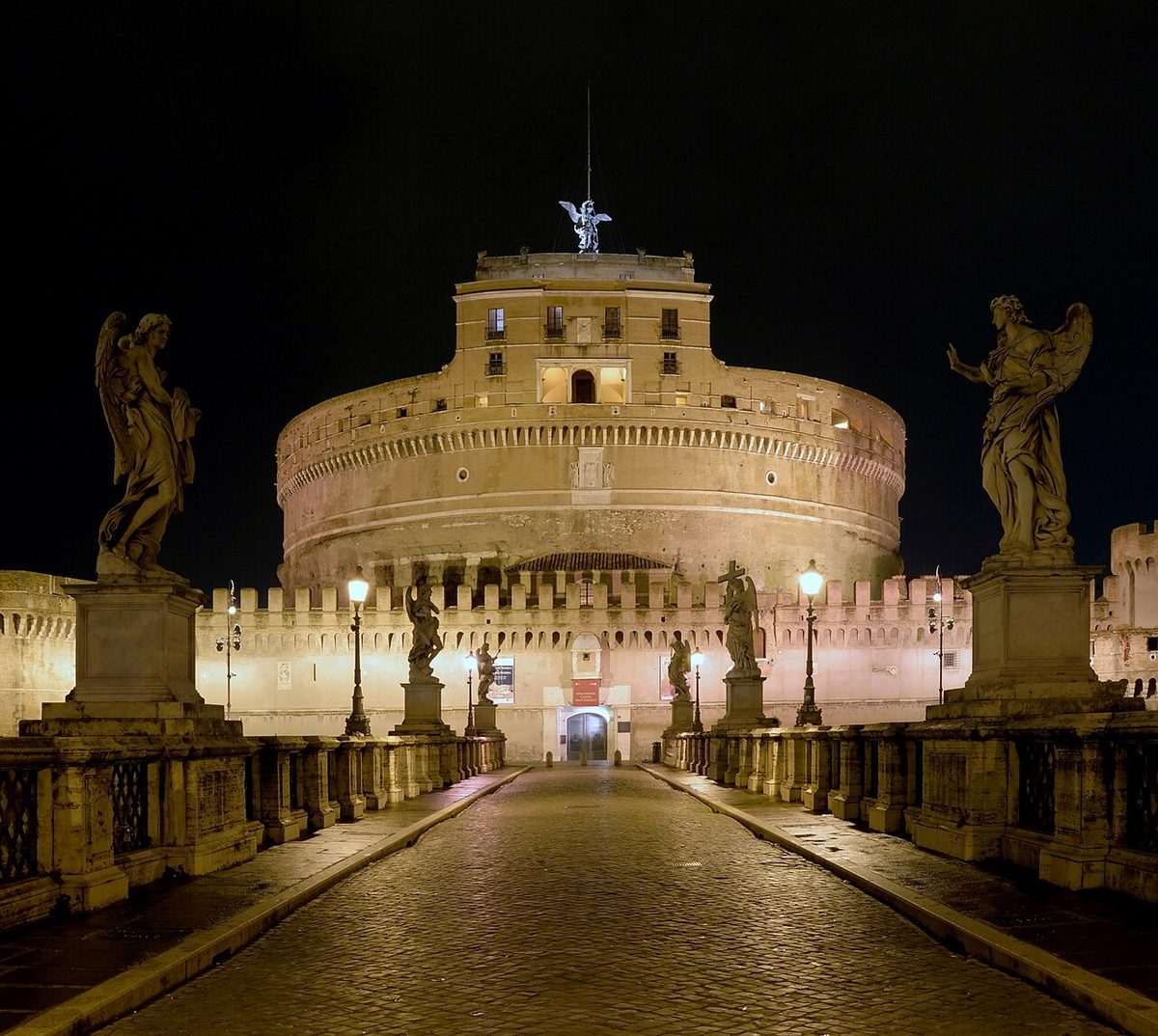
The angel above gives the castle its familiar identity. Its story is linked to a vision traditionally associated with the end of a plague in 590. That is a legend, rather than something the statue proves.
Your takeaway: this building has a career, not just a birthday. Look at it and try holding tomb and fortress in your mind at once.
One shape, several stories
Begin with the photograph and find the broad circular body. Then look for the smaller structures above it. That difference in scale makes the building easy to recognise even if you have never heard its name. The heavy base and busy upper outline give your eye two quite different things to read.
Think about what changes when a place of remembrance becomes a place of defence. The first role asks you to think about someone who has died. The second asks you to think about people trying to stay safe. The same mass of masonry can feel very different when you attach those purposes to it.
The Passetto connection is another way to imagine the castle within the city. It is not simply a dramatic object beside a river. It was connected with the needs of people elsewhere. The official tourism description places it close to the Vatican and explains that elevated link.
If you are near the bridge, pause and look at the relation between the river, the approach, and the building. If you are at home, let the photograph stand in for that view. Pick out the route your eyes take from foreground to skyline.
You have already done something more useful than memorising five dates: you have started reading a place through its changes.
The long second act
For a slower visit, imagine three captions under the same photograph: imperial tomb, fortified refuge, museum. None of the captions tells the whole story. Together they make the building feel like a long sequence of decisions made by different people.
Now separate observation from imagination. You can observe the circular mass, the surrounding structures, and the figure high above. You can imagine movement through the place and the feelings attached to its different uses. Keeping those two activities distinct lets you enjoy the story without mistaking a vivid picture for historical proof.
The angel legend gives the castle another kind of meaning, one formed through belief and remembrance. A guide can tell you that tradition while still identifying it as a tradition. That small distinction is useful whenever you explore a city where stories and material history are woven together.
Try a final looking exercise. Find a part of the building that seems closed and heavy. Then find something that opens a view. Then find an edge that catches the light. Spend a few seconds on each. The landmark becomes more specific when you have three details of your own.
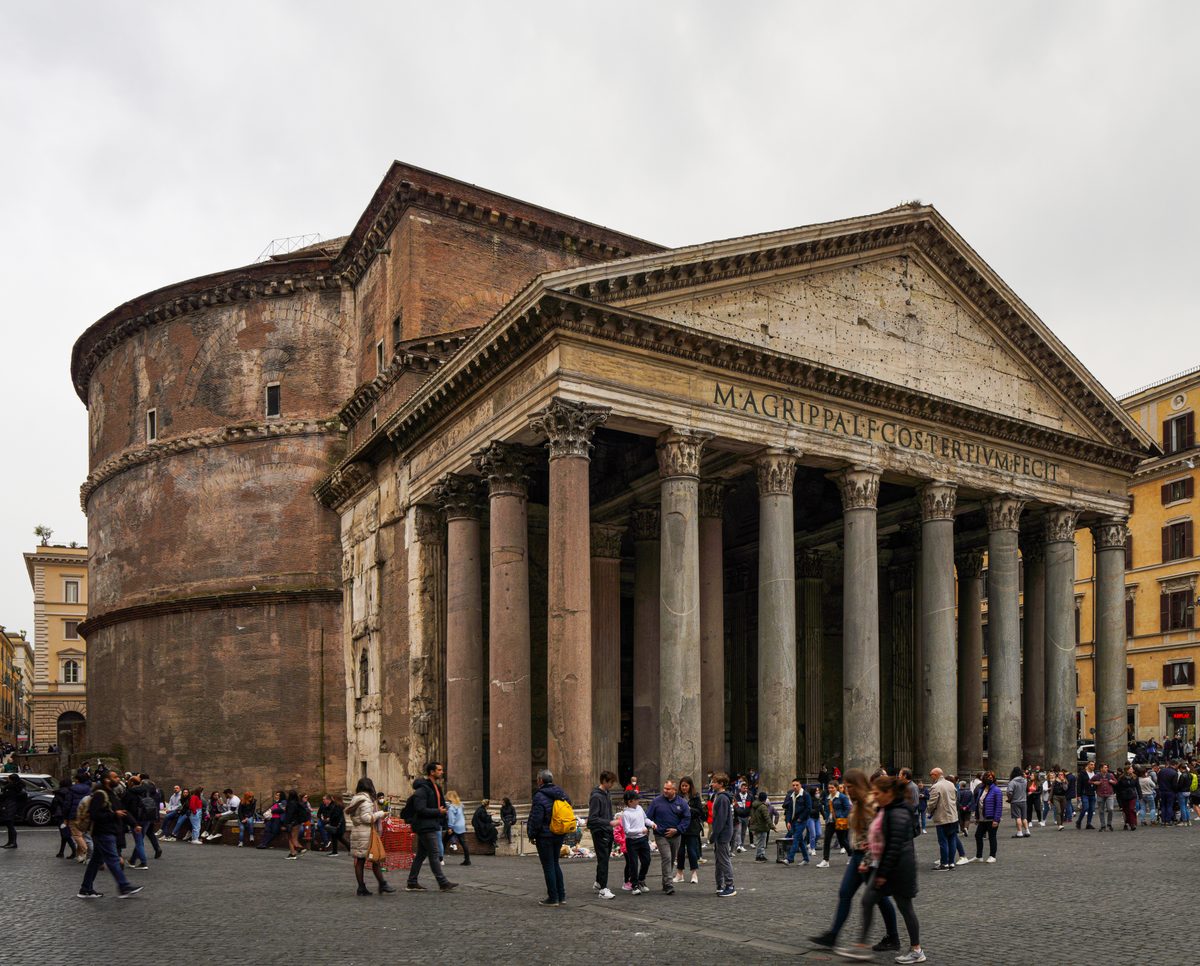
The Pantheon offers another example of a Roman building continuing into a very different life. There the original history meets centuries of use as a church. Here the change leads through fortification and refuge. Neither place belongs only to the moment when its construction began. That is one of the pleasures of Rome: an old shape can keep collecting new stories.
 🏛️
🏛️ ☀️
☀️ 💦
💦 ⏳
⏳ 🏰
🏰