A gateway that slowed people down
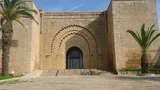
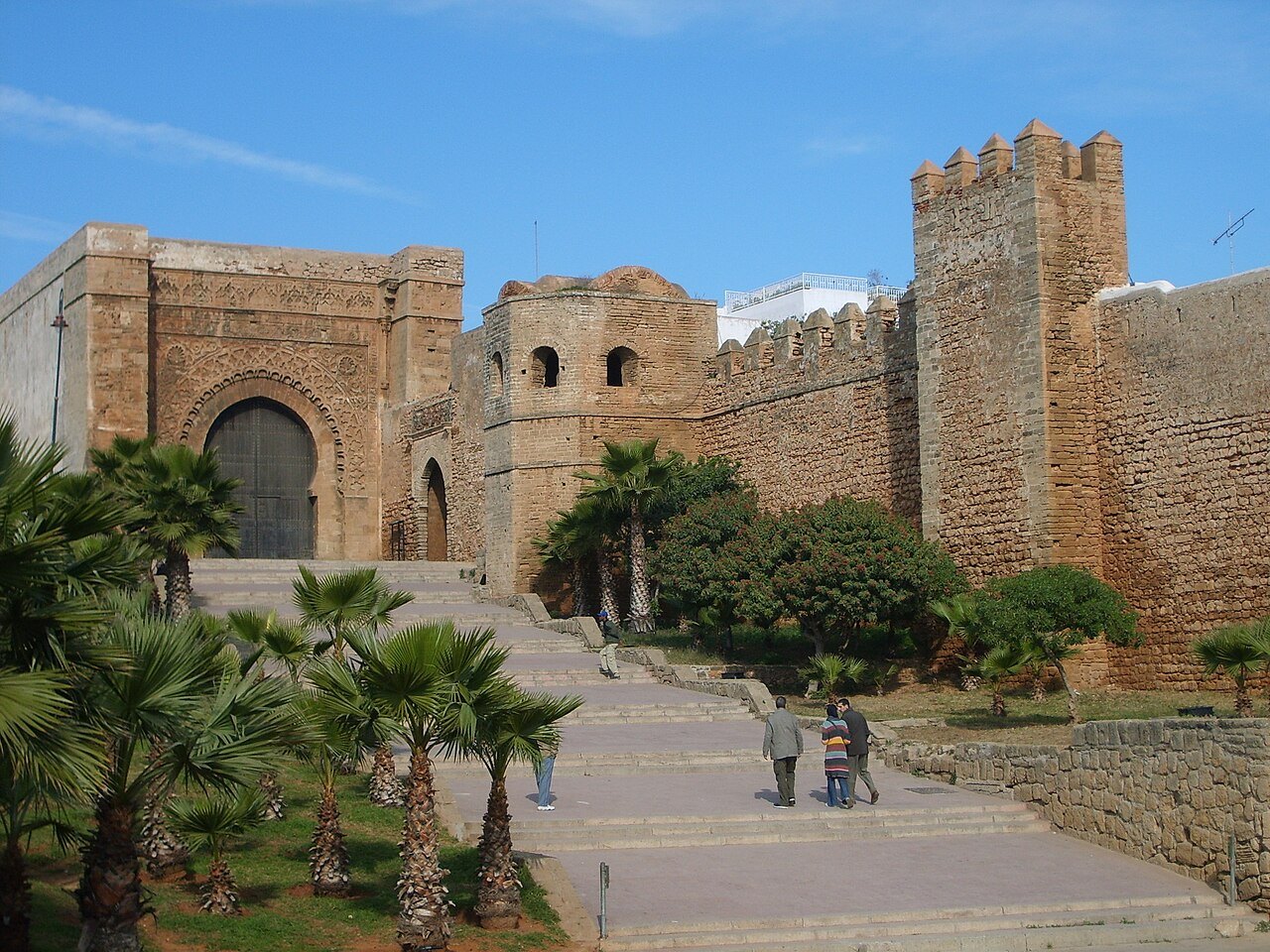
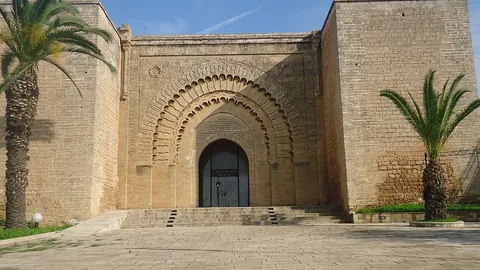
Bab Rouah is an Almohad gate in Rabat's historic walls, completed in 1197 under Yaqub al-Mansur. Its decorated exterior makes a strong first impression, but the depth behind the façade explains what the structure did. A bent passage through guardrooms controlled movement rather than allowing a straight rush into the city.
The interior has since become a place for art exhibitions. That change gives the same building another kind of use: spaces once associated with defence can now hold work intended for public viewing.
Begin outside by noticing the relationship between the entrance, projecting masses and carved frame. If the gallery is open, follow its permitted route and compare the depth of the gate with the impression you had from the street. The military function and the ornament belong together. A city entrance could regulate access while also presenting the authority of the ruler who commissioned it.
The wall made the doorway matter
A monumental gate is easier to understand when it is treated as part of a boundary. Bab Rouah belonged to the Almohad enclosure of Rabat. Its scale and position made it more than an ordinary gap in a wall.
Look for how the surviving structure relates to the line of the fortifications and to today's streets. Modern traffic and open space may make the gate look like a freestanding monument, but its original purpose depended on controlling a crossing.
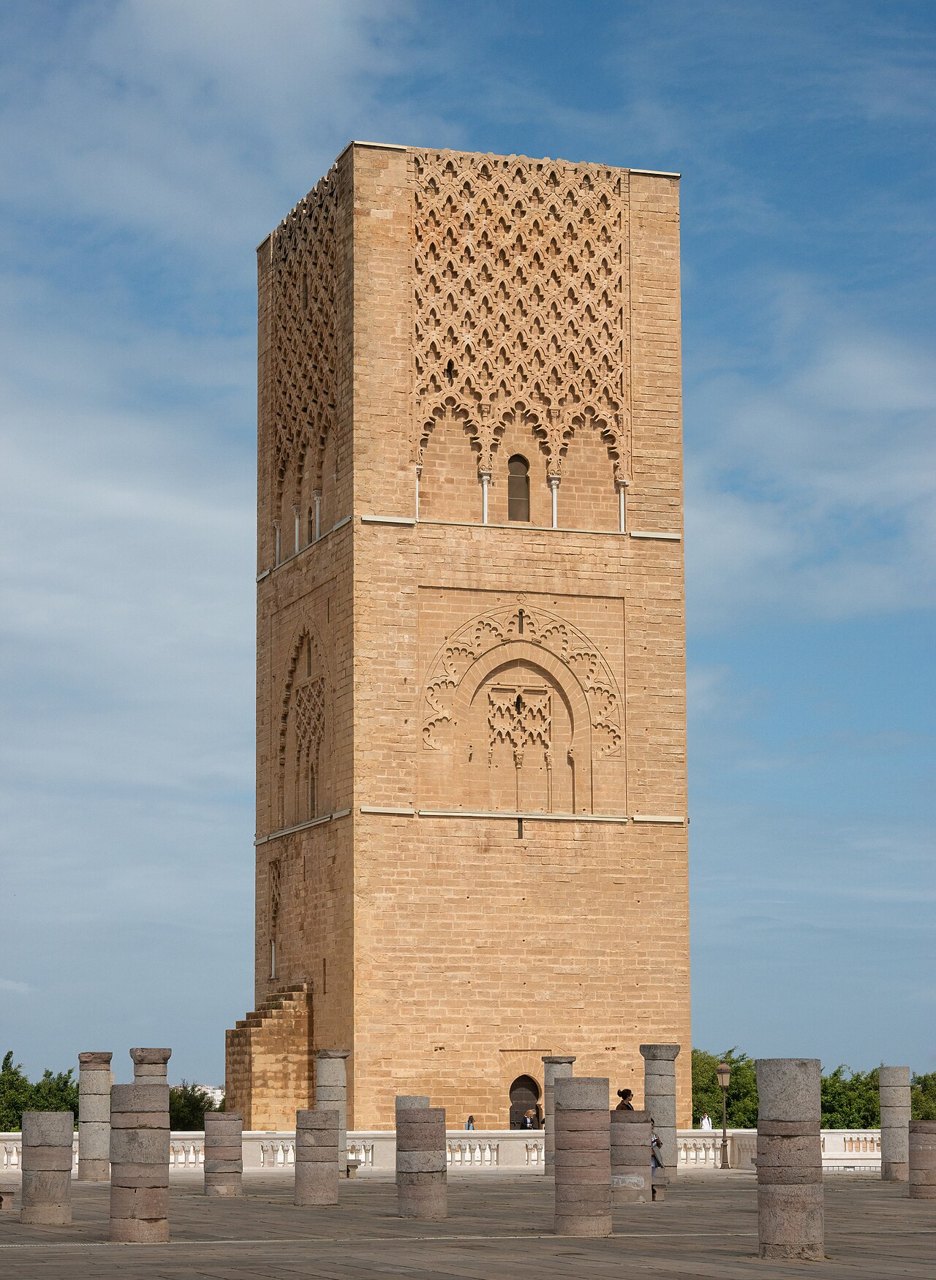
Yaqub al-Mansur also belongs to the history of Rabat's larger Almohad ambitions, including the project associated with Hassan Tower. The connection gives a useful context without turning the gate into a small version of the mosque. Each building organised people differently.
At Hassan Tower, scale speaks through the remains of a major religious project. At Bab Rouah, authority is particularly tangible in the act of entering and in the space designed to manage that act.
The façade and the passage ask for different attention
The exterior includes carved interlacing forms, floral ornament and an inscription framing the entrance. These features can be appreciated through their arrangement even if you cannot read the script.
Identify one border and follow it. Notice where the pattern turns, where it changes and how it relates to the opening. That is more useful than describing the whole façade as intricate and moving on.
The passage offers a different problem. Turns interrupt a direct route; guardrooms make the doorway a sequence of spaces. A person looking only at the decorated front misses that physical depth.
If the interior is closed, do not assume a straight route from the visible opening. The documented plan still explains why the gate is a building in its own right, rather than a decorated arch with nothing behind it.
Not every part dates to 1197
The date of the Almohad gate does not make its present appearance entirely twelfth century. Museum With No Frontiers identifies the current entrance arch as a later addition from the eighteenth century.
That distinction is easy to lose when one date appears beside a monument's name. Buildings can retain their main structure while later interventions alter the part visitors see first.
The later arch belongs to the continued use and adaptation of the entrance. It records a building still being changed centuries after its original commission.
The same principle applies to repairs and the gallery conversion. A monument preserved for a new use can carry both older fabric and later decisions. Clear interpretation makes those stages easier to recognise.
Art changes what happens inside the threshold
The former guardrooms now accommodate exhibitions. Follow the gallery's current programme rather than assuming a particular artist or collection will be on view.
The setting may affect how you experience a work: enclosed rooms, turns and thick construction differ from a large modern exhibition hall. The exhibition may respond to that setting, or it may pursue a different subject; its own information can explain the relationship.
You can still notice what the new use makes possible. A building once designed to manage entry becomes a reason for people to enter and spend time. Its historic structure continues to shape movement, but the purpose of that movement has changed.
Check gallery access separately from an exterior visit. A gate visible from the street is not a promise of an open interior at every hour.
Give the doorway its depth again
Before leaving, look at the exterior once more and place the sequence of rooms behind it in your mind. The carved front should now have a working building attached to it.
That is Bab Rouah's particular contribution to a Rabat visit. It makes entry itself a subject: who controlled a boundary, how architecture made that control effective, and how the same space can be used differently centuries later.
 EXPLORE THE CITYRabat city guideRead the city guide ↗
 ☀️
☀️ ☀️
☀️ ☀️
☀️ ☀️
☀️ ☀️
☀️ ☀️
☀️ 🏛️
🏛️ 🏛️
🏛️ 🏛️
🏛️ 🏛️
🏛️