Two lines through one royal memorial
Thiệu Trị Tomb, or Xương Lăng, offers a useful way to understand Huế's royal funerary architecture: its burial and worship areas follow separate, parallel lines. Rather than treating every building as a stage on one central route, first work out which area serves which purpose.
Emperor Thiệu Trị died in 1847, and his son Tự Đức directed the main construction campaign the following year. Official accounts connect the relatively restrained plan with the late emperor's wish to avoid excessive demands on labour and resources.
The tomb draws on earlier Nguyễn designs while arranging them for its own setting. Notice the relationship between the grave area, water and Biểu Đức worship hall. Neither area is a secondary attraction simply because it sits off the line you followed first. Understanding the two-part plan gives you a practical way to navigate and a historical one: this is a son's work of remembrance, shaped both by inherited court conventions and by instructions attributed to his father.
A son had to complete the memorial
Unlike a tomb substantially planned and used by an emperor during his lifetime, Xương Lăng took shape after Thiệu Trị's death. The succession placed the task with Tự Đức. The principal works belong to 1848, although descriptions differ in how they summarise the pace of construction and subsequent additions.
The instructions attributed to Thiệu Trị favour a convenient site and restrained expenditure. This gives a useful background to the plan without proving that every choice resulted from economy alone. Court ritual and the suitability of the ground also mattered.
Tự Đức began his reign with the practical and ceremonial task of organising his father's burial and commemoration.
Separate the grave from the worship hall
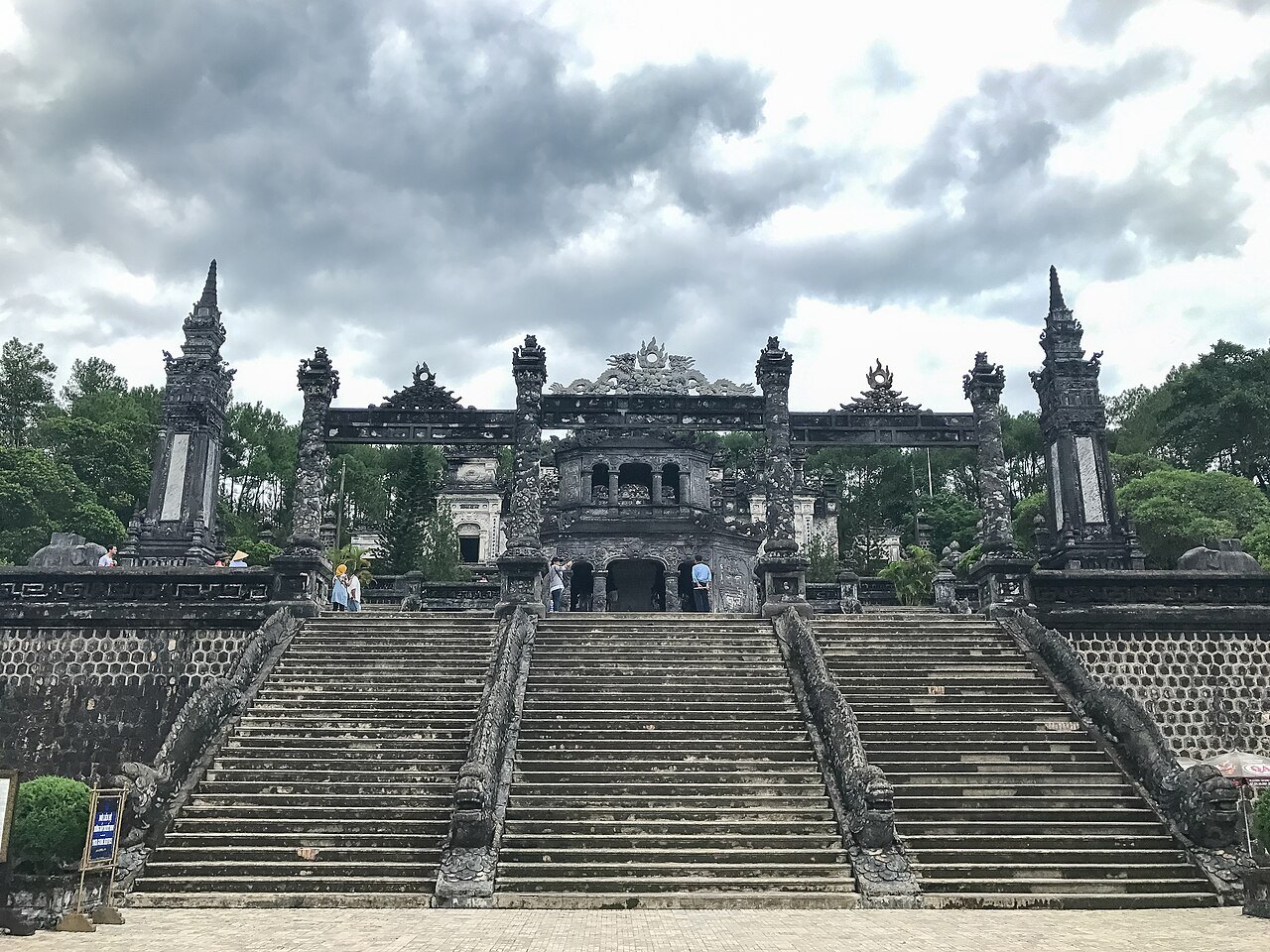
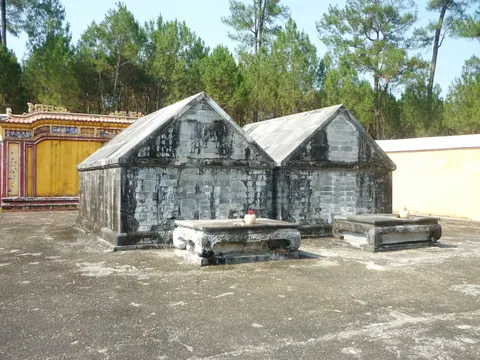
The distinction between burial and worship is visible in the arrangement. Official descriptions identify the tomb line on one side and the worship buildings on the other, with both related to the wider landscape.
Begin with a site map if one is provided. Locate Biểu Đức hall and the burial area before choosing your path. This prevents a common misunderstanding at complex royal sites: reaching an impressive hall and assuming you have reached the grave itself.
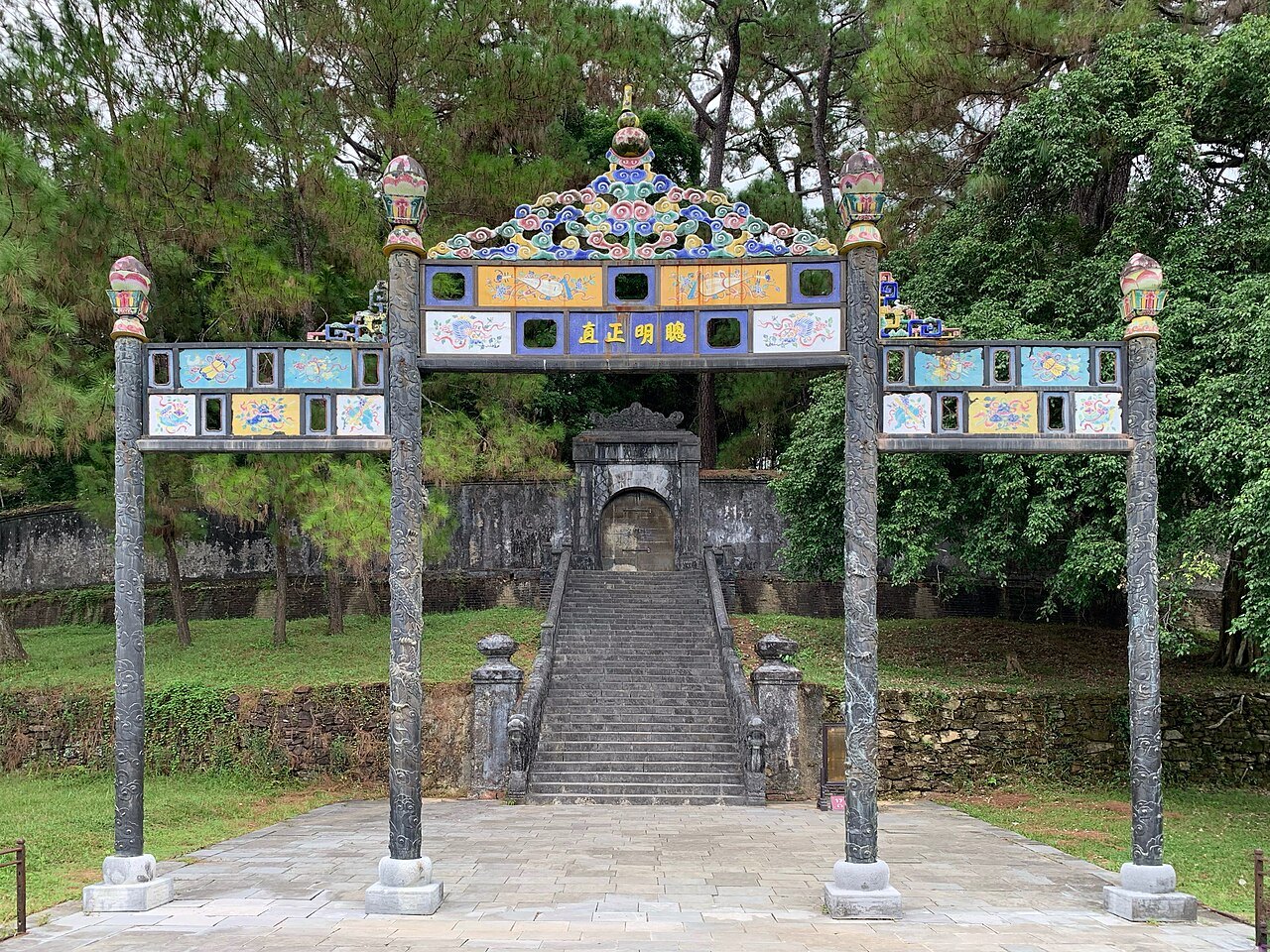
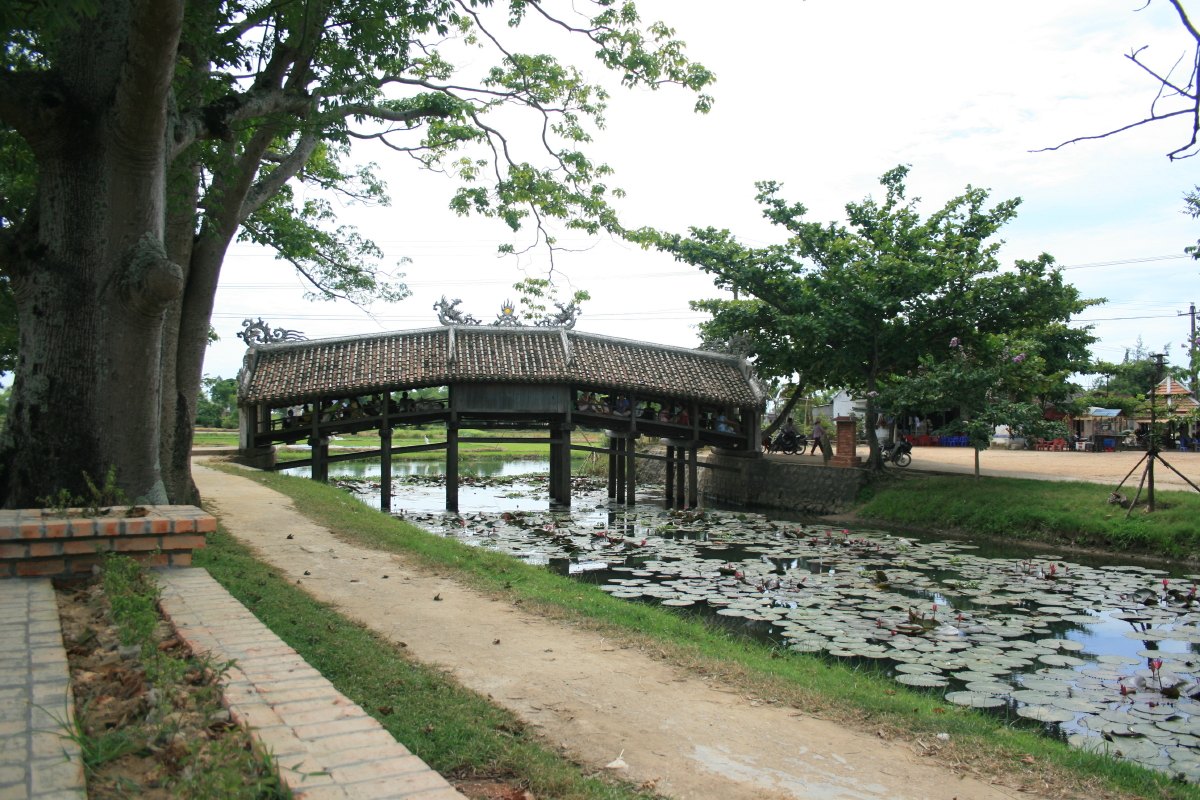
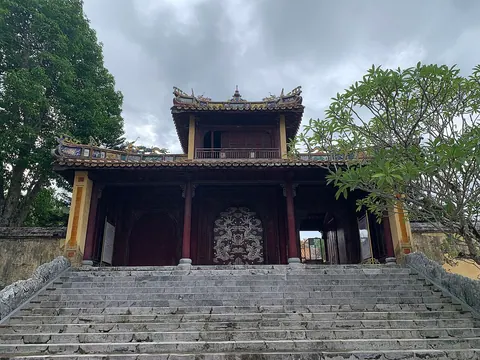
Look for how water and thresholds mark changes between areas. A pond or bridge can make an approach legible even where the original superstructure no longer survives completely. Follow the visitor route rather than attempting to recreate a ceremonial procession across restricted ground.
A missing building also deserves an accurate description. A surviving platform may tell you where a structure stood without allowing you to reconstruct its height or appearance from observation alone. Interpretation can supply what the remains cannot.
A design inherited and rearranged
Huế's official account relates Xương Lăng to both Gia Long and Minh Mạng tombs. Its separate worship and burial areas invite comparison with Gia Long, while other features draw on the arrangements used at Minh Mạng's memorial.
This does not make Thiệu Trị's tomb a copy with fewer buildings. The selection and rearrangement are the point. A court could work within established funerary conventions while adapting the result to a new commission and terrain.
If you have visited another royal tomb, compare one feature you can identify confidently: the alignment of an approach, the position of the worship hall or the relationship between water and grave. A narrow comparison is more useful than calling one tomb grand and another simple.
Biểu Đức holds more than architectural detail
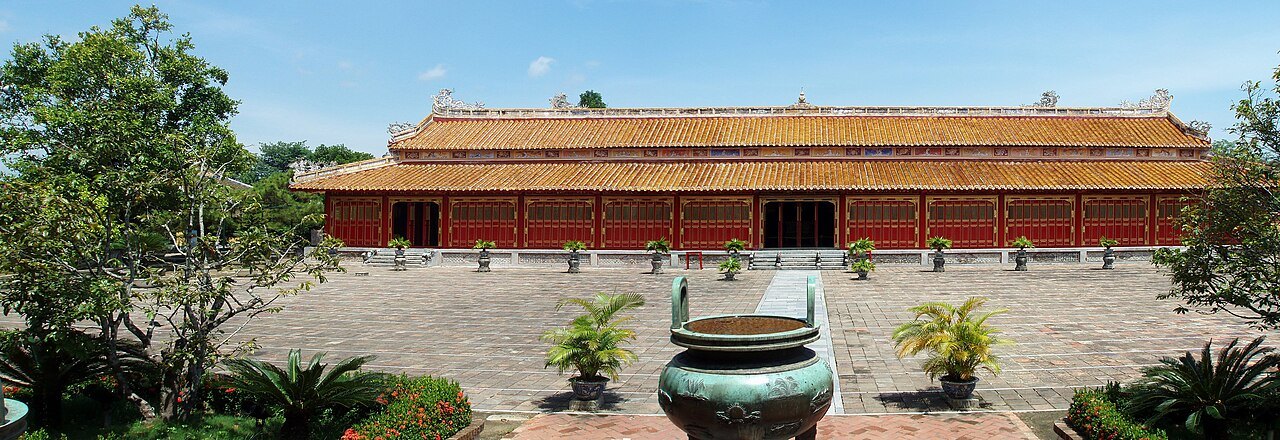
The worship hall belongs to the continuing commemoration of the emperor. Its decorative material also deserves attention. Research published through Huế's tourism portal discusses royal mirror paintings preserved at the tomb, including works associated with Biểu Đức.
A painted mirror is not simply a mirror used for looking at yourself. It is a worked surface carrying imagery and, in some cases, inscriptions. The combination asks for a slower kind of looking than a quick glance around a room.
Display arrangements can change, and fragile works may not always be accessible. If examples are visible, use the labels to identify them. Avoid assigning an origin or translating an inscription from appearance alone; the published research itself discusses questions of provenance.
Even without access to those objects, the hall remains important to understanding the plan. It gives a setting to remembrance, distinct from the enclosure of the grave.
Carry the plan into the next tomb
Before leaving, make sure you can distinguish the two principal areas in your own words. That simple understanding will improve a later visit to another Nguyễn tomb more than memorising a list of unfamiliar building names.
At Xương Lăng, a burial place and a worship place were brought together through a shared landscape without being forced onto one continuous line. The arrangement is the story you can still follow on the ground.
 EXPLORE THE CITYHuế city guideRead the city guide ↗
 🏯
🏯 🏯
🏯 🏯
🏯 🏯
🏯 🏯
🏯 🏯
🏯 🏯
🏯 🏯
🏯 🏯
🏯 🧺
🧺