Huế beyond the royal court
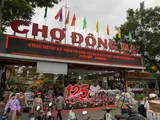
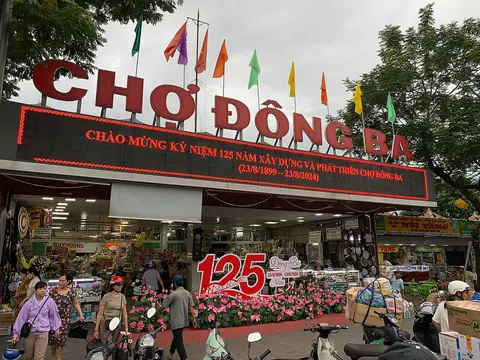
Đông Ba Market gives a Huế visit a different centre of attention. The city's palaces and tombs organise stories around emperors; the market connects food, household needs and skilled production with people making a living now.
Vietnam's tourism authority identifies Đông Ba with regional goods including Phú Cam conical hats, sesame sweets, jewellery and Huế dishes. Those names are more useful when attached to a real object or meal than when read as a shopping list. Choose one thing you are curious about, find out what it is, and let that conversation set the pace of the visit.
The market is a workplace. Stand clear of transactions, ask before photographing people, and check a price before agreeing to buy. Its value does not depend on finding the oldest stall or declaring that every item is handmade locally. A careful visit notices the difference between production, sale and everyday use. That distinction makes the market a worthwhile companion to the city's monumental history rather than just a stop for souvenirs.
The market moved with the city
The market's history connects directly with the imperial city, even though its present life reaches beyond it. Vietnam's national tourism account describes an earlier market called Qui Gia near the eastern gate of the Citadel. It was destroyed during the French attack on the capital in 1885, rebuilt under Đồng Khánh in 1887 and renamed Đông Ba.
In 1899, Thành Thái moved the market to its present riverside location during a programme of urban reorganisation. That sequence explains why a market can carry a historical name without occupying exactly the same ground throughout its history.
Its customers included institutions as well as individual households. The official account records supplies going to the court, hospitals, military establishments and schools. Food linked these different parts of Huế through a working commercial system.
Look at the market as part of the city around it. A location near movement along the river and between districts makes more sense for everyday trade than an isolated monument would. The history here includes decisions about how Huế should function, not only how it should be represented.
One dish is enough to begin
The national tourism authority connects Đông Ba with dishes such as bún bò, a beef noodle soup associated with Huế, and cơm hến, rice served with small shellfish and accompaniments. Availability and preparation vary by stall, so use the names as a starting point for enquiry.
Before ordering, establish what is being served and what the price includes. If you need information about ingredients or allergens, ask directly and do not treat a dish name as a full ingredient list. The guide cannot verify an individual seller's preparation.
Compare how the dish is assembled: a bowl of noodles and broth offers a different balance from rice with shellfish and its accompaniments. The names begin to make sense through the preparations.
A specific meal can also correct the tendency to describe Huế's cuisine only through royal dining. The market is a place to encounter food being sold and eaten in a contemporary commercial setting, with its own pace and priorities.
A hat or a sweet can lead beyond the market
Phú Cam conical hats and mè xửng sesame sweets are among the regional products named in official visitor information. They offer two different questions: how an object is made, and how a food is prepared and sold.
For a hat, ask about the material and making before assuming that appearance proves origin. If the seller is willing to explain, a small detail of construction can be more memorable than a general claim that the craft is ancient.
For a packaged food, read whatever information is available about ingredients, producer and storage. That is useful both for understanding what you are buying and for deciding whether it suits your needs. A familiar regional name does not make all products identical.
The market brings goods together; it does not contain every stage of their production. A thoughtful purchase can point towards a workshop, a district or a food tradition elsewhere in Huế. It need not pretend that the whole supply chain is visible from the counter.
Rice flour takes several forms in Huế
A few names make the city's food easier to recognise. Bánh bèo are small steamed rice cakes, commonly served in individual saucers with toppings. Bánh nậm use a thin rice-flour preparation wrapped in leaves for steaming. Bánh bột lọc are translucent tapioca dumplings, often containing shrimp and pork.
The national tourism authority describes these among Huế's specialties. They are not a promise that every stall at Đông Ba offers all three, and recipes vary. Ask what is available before choosing.
Comparing two preparations can teach you more than ordering a large assortment without understanding it. Notice the difference between a steamed cake holding its shape in a saucer and a filled dumpling revealed by opening a leaf parcel. A shared regional association does not mean a shared texture or method.
There is no need to attach a royal origin to every small dish. Huế's culinary history includes courtly traditions, but a specific claim about where a recipe began needs more evidence than its elegance. The preparation in front of you is interesting enough to deserve attention on its own.
Put the market beside the monuments
Đông Ba works well as a different kind of visit during time in central Huế. The royal tombs lie beyond the centre and require separate transport planning; the market should not be used as a reason to promise a single walking circuit that covers them all.
After visiting a palace or tomb, the market can shift your attention from a ruling household to the many kinds of work that sustain a city. Keep one concrete connection: an object made with skill, a regional food you can now identify, or a transaction you watched without disrupting it.
That is enough to make Đông Ba part of Huế's story in its own right. It is a place where history can lead into the present, while the people around you continue with their day.
 EXPLORE THE CITYHuế city guideRead the city guide ↗
 🏯
🏯 🏯
🏯 🏯
🏯 🏯
🏯 🏯
🏯 🏯
🏯 🏯
🏯 🏯
🏯 🏯
🏯 🧺
🧺