A tomb made in several reigns
Đồng Khánh Tomb is especially interesting because its different parts did not emerge from one uninterrupted building project. A hall begun for the emperor's father was redirected to commemorate Đồng Khánh after his death in 1889. Later work under his son, Emperor Khải Định, substantially altered the complex.
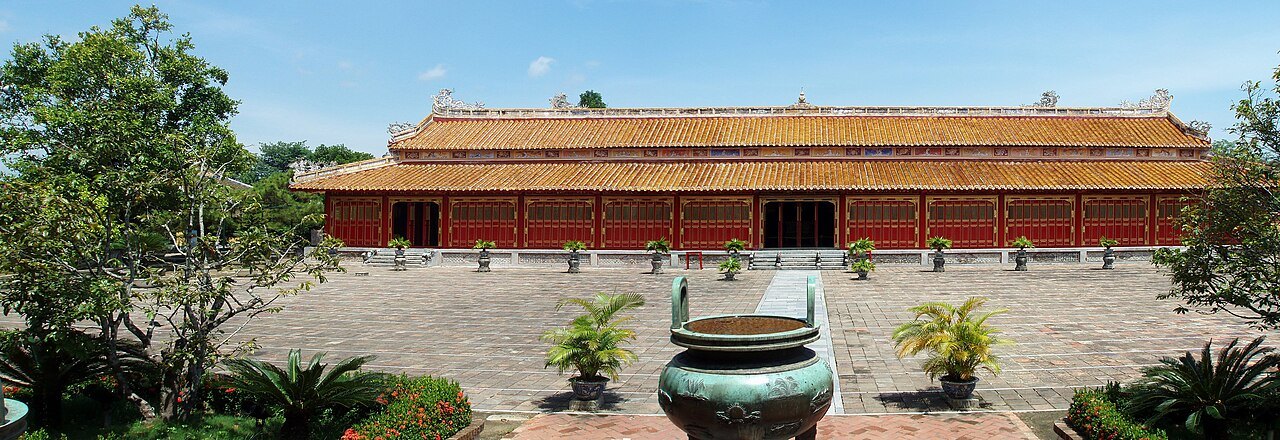
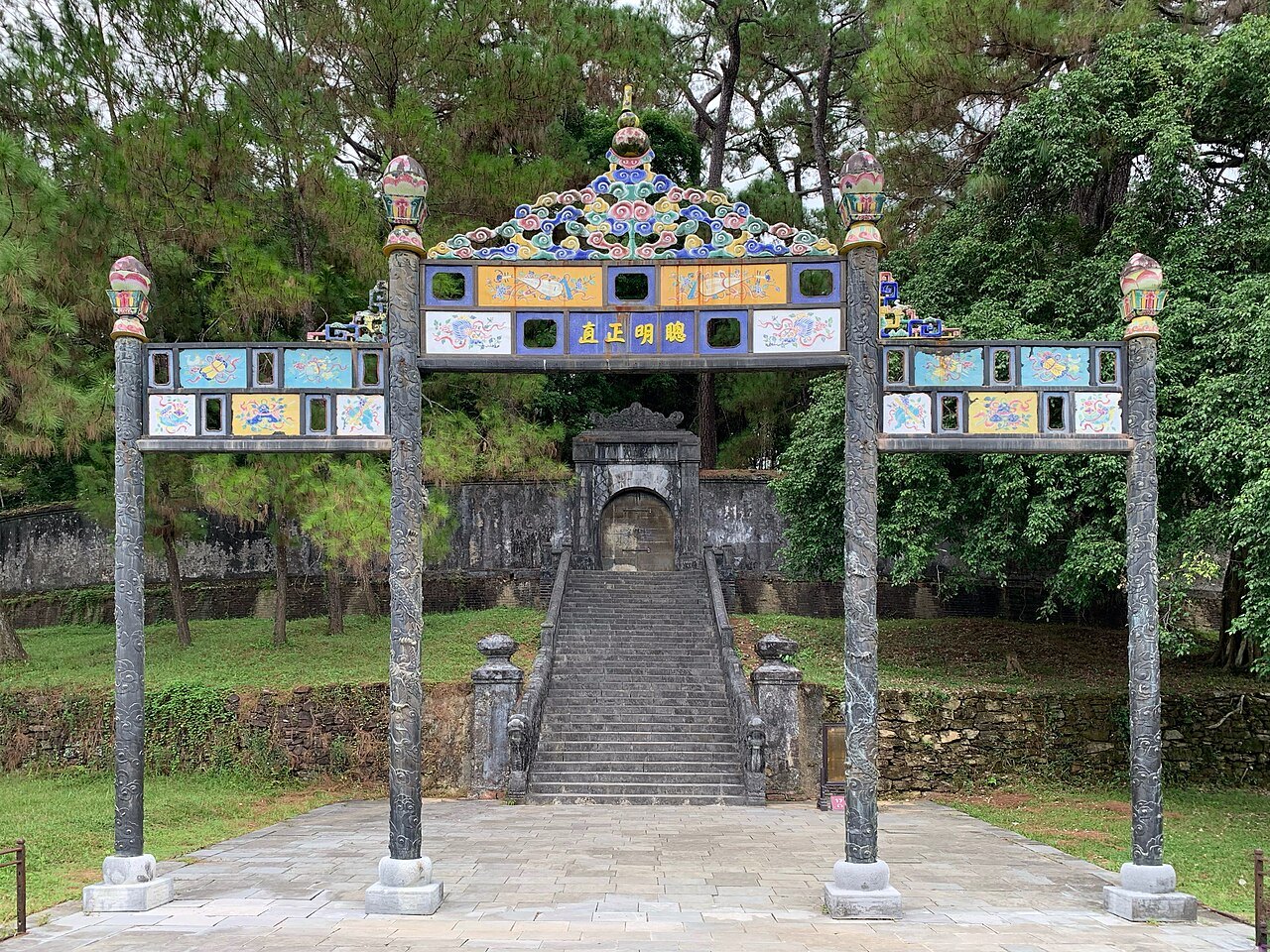
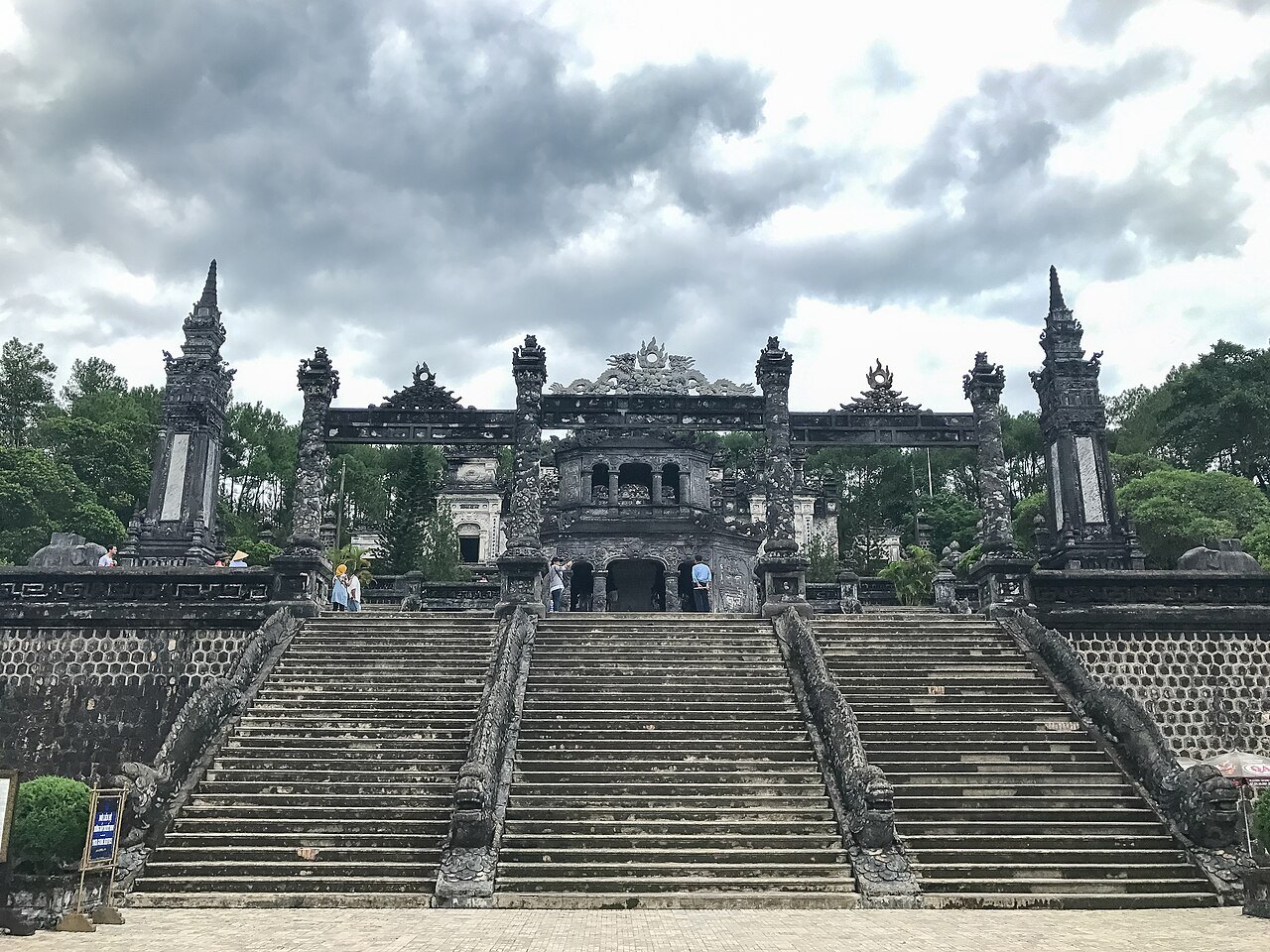
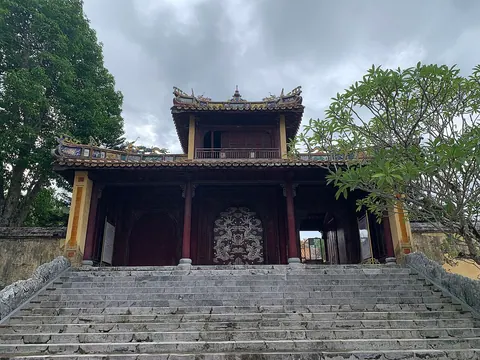
Look for differences between the worship hall and the burial architecture, rather than expecting a single style. The Ngưng Hy hall carries elaborate decoration within a traditional palace-building form; other parts reflect later materials and changing architectural tastes.
This is a useful companion to nearby Tự Đức Tomb because it makes the later Nguyễn period visible through alterations to an existing project. The question is not simply which emperor is buried here. It is who built each part, for whom, and when its purpose changed. Keeping that sequence clear turns an apparent mixture into evidence of a family and court responding to successive deaths, accessions and new decisions about royal remembrance.
A hall changed its dedication
The project began with Truy Tư hall, intended for worship of Đồng Khánh's father, Kiên Thái Vương. Work was still underway when the emperor died. His successor, Thành Thái, used the building to commemorate Đồng Khánh and renamed it Ngưng Hy.
A change of dedication can leave the building's form in place while giving it a different role. That is why the history of this hall matters before its ornament. It was not conceived from the outset as every part of the tomb you see today.
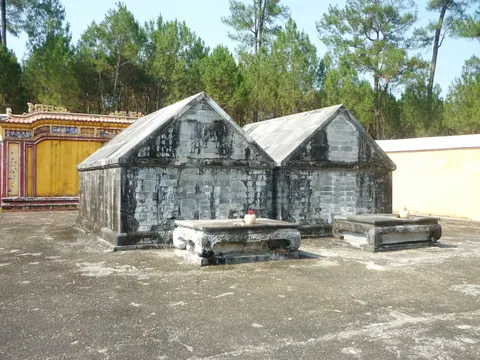
The burial area developed separately nearby. Distinguishing worship and burial helps explain the plan: one place supported remembrance and ceremony, while another held the emperor's grave.
Several later interventions followed. This extended history makes a single construction date misleading. The complex is better understood as a sequence than as a completed object attached to one year.
Ngưng Hy rewards close looking
The hall's roof and decorative surfaces offer a different scale of attention from the overall tomb plan. Official descriptions identify terracotta reliefs and painted scenes associated with the Twenty-Four Filial Exemplars, a set of stories about duty towards parents.
That subject fits a commemorative building, but it should not become a guessing game. If a scene is not identified on a label, describe what you can see without assigning it a particular tale. Recognising that an image belongs to a moral story is different from knowing which episode it represents.
Try looking at one panel long enough to notice how the scene is arranged. Then compare it with a nearby decorative element. Narrative pictures and patterned ornament can occupy the same building while asking for different kinds of attention.
The craftsmanship also prevents the tomb from being reduced to a contest between traditional and imported styles. Materials were selected and worked by people. Differences in form can be observed without declaring that one part is more authentically Vietnamese than another.
Khải Định rebuilt his father's memorial
After becoming emperor in 1916, Khải Định commissioned substantial work at his father's tomb. The later interventions included ceremonial features and further work on the worship buildings into the 1920s.
This provides a direct family connection between two Huế tombs. If you visit Khải Định's own mausoleum, the relationship is more informative than a general remark that both sites contain European influences. At Đồng Khánh, his contribution belonged to the memorial of an earlier emperor.
Look for a change in material or surface treatment and then check whether the interpretation associates it with a particular phase. A visual contrast can suggest a question; the source provides the chronology needed to answer it.
The later Nguyễn court operated under French colonial power. The tomb's changing materials and forms belong to that period of contact and unequal authority, although they also reflect choices made by the court and its craftspeople.
What an uneven history leaves behind
A plan developed over several reigns may feel less uniform than one conceived and executed in a concentrated campaign. That is part of this tomb's value. You can see how inherited work became the starting point for later decisions.
Instead of asking which section is the original one and dismissing the rest, consider what each phase made possible. A hall could be reassigned. A relatively simple burial could receive a more elaborate ceremonial setting. Later rulers could invest in the memory of a predecessor while giving that memory their own architectural form.
Give this tomb its own place in the visit
Đồng Khánh and Tự Đức can be considered together when planning excursions, but each deserves its own entrance and access check. Proximity is not proof of a shared ticket, open connecting path or short accessible walk.
Leave with the change of dedication clear in your mind. A building begun for a father became a memorial to his son, and another son later reshaped the burial complex. That family sequence is the thread that holds the different surfaces together.
 EXPLORE THE CITYHuế city guideRead the city guide ↗
 🏯
🏯 🏯
🏯 🏯
🏯 🏯
🏯 🏯
🏯 🏯
🏯 🏯
🏯 🏯
🏯 🏯
🏯 🧺
🧺