The columns are a reconstruction with evidence behind them
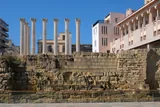
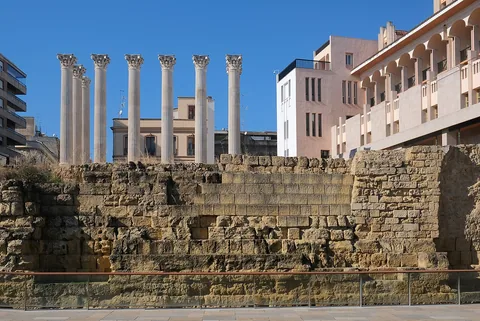
Córdoba's Roman Temple stands beside the modern town hall, its reconstructed columns making a lost monumental setting visible within the current city. The ancient building was associated with the imperial cult and a larger provincial ceremonial complex.
The key distinction is between the Roman remains and their modern architectural presentation. The standing reconstruction helps you understand scale; it does not mean that every column has survived in place at full height since antiquity.
Look first at the raised platform and the relationship between the columns and today's street. Then examine whatever original material and interpretation you can see from permitted areas. A temple elevated above its surroundings offered a very different approach from an ordinary doorway. The site is useful precisely because ancient Córdoba and the present city meet here so closely. You can recognise a public statement about imperial authority while also seeing the modern choices that make that statement legible again.
What the imperial cult adds to the story
The temple belonged to the religious and political life of Roman Córdoba. The city's visitor information identifies it with worship associated with the emperor, rather than simply describing it as a building for unspecified Roman gods.
The imperial cult linked public ritual with the standing of imperial rule. That relationship gave a religious building an important place in the public presentation of imperial rule.
A major temple also affected the appearance of the city around it. Elevated architecture, an altar and a formal approach could distinguish a ceremonial precinct from everyday circulation. The surrounding urban plan mattered to how the monument was encountered.
Reconstruct the approach in your mind
The original temple stood on a podium, with a six-column Corinthian entrance. Those two features give you a useful starting point for understanding its front: a raised building and a columned threshold.
Imagine only what the evidence supports. A person approaching would have encountered a change in level and an architectural façade. The surrounding buildings and ceremonial spaces would have affected the view, even though much of that setting is missing today.
Then compare the reconstructed front with your actual position. You are seeing it from a modern city with different circulation and ground conditions. The difference explains why an ancient building can feel detached from its original purpose when viewed as a roadside ruin.
The Corinthian order is recognisable through its elaborate capitals. Compare the detail at the top of a column with the plain length of the shaft: ornament is concentrated where support meets the structure above.
Why the modern work matters
Córdoba's official account credits architect Félix Hernández with the reconstruction. Re-erecting elements made the ancient monument more visible and gave the city a way to present a building whose original form was incomplete.
Such work answers a visitor's need to understand volume and scale. It also requires careful distinction between what was recovered and what was supplied. A complete-looking outline can be helpful without being wholly ancient.
Look for interpretation identifying original fragments and the basis of the reconstructed form. Some pieces associated with the temple are held in Córdoba's Archaeological Museum, while others have been reused or displayed elsewhere in the city.
That dispersal is part of the monument's later history. An ancient building can survive as archaeological foundations, reconstructed architecture and individual fragments in several locations at once.
A short stop that can improve a longer visit
The Roman Temple works as a focused encounter with one aspect of Córdoba's earlier public life. It does not require a long invented itinerary inside a monument whose access may change.
From a lawful public viewpoint, consider the podium, columned front and relationship with the present town hall. Check current arrangements if you want to enter any visitor area; an exterior view does not establish that the remains are open to walk through.
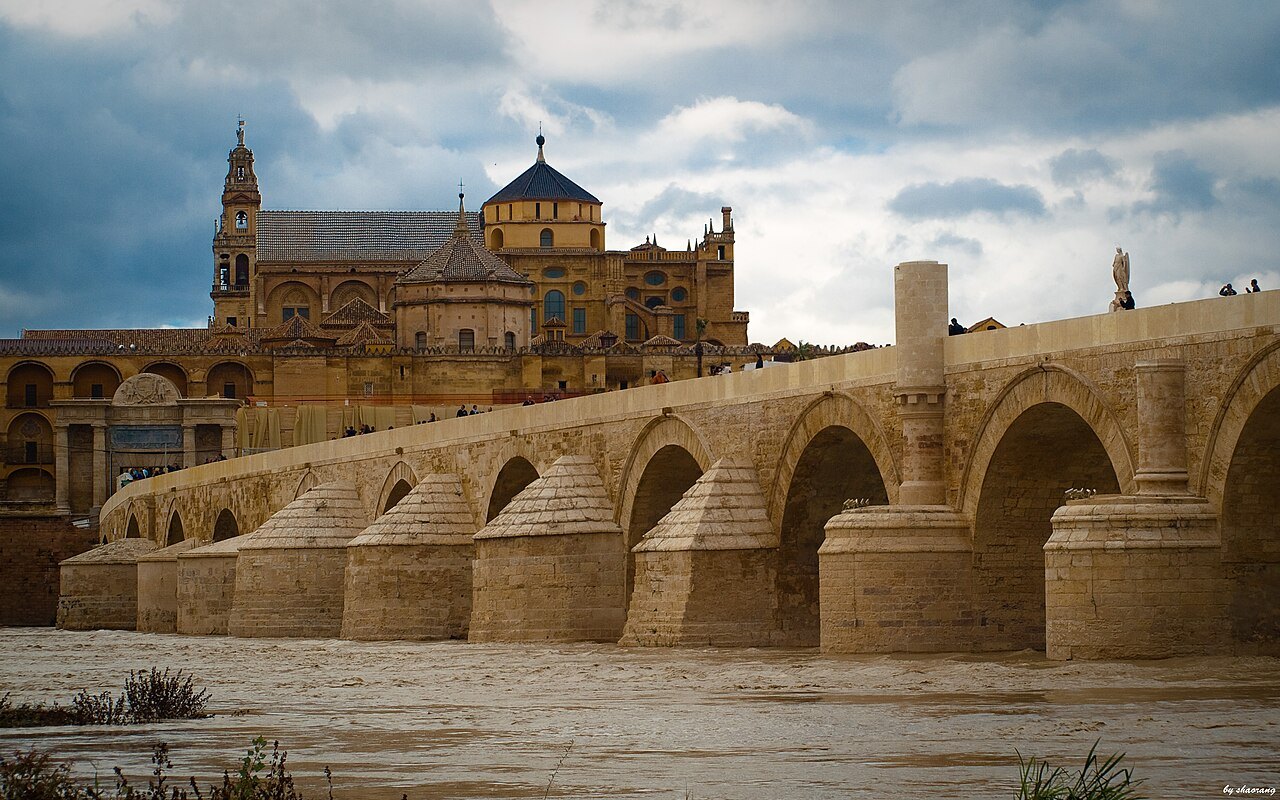
If you later visit the Archaeological Museum or cross the Roman Bridge, carry the distinction between surviving fabric and later alteration with you. Roman Córdoba becomes easier to understand when each structure is allowed its own construction and reuse history.
The columns give an outline to something lost. The evidence underneath and around them explains why that outline deserves attention.
 EXPLORE THE CITYCórdoba city guideRead the city guide ↗
 🏛️
🏛️ 🏛️
🏛️ 🏛️
🏛️ 🏛️
🏛️ 🏛️
🏛️ 🏛️
🏛️ 🏛️
🏛️ 🏛️
🏛️ 🏛️
🏛️ 🏛️
🏛️